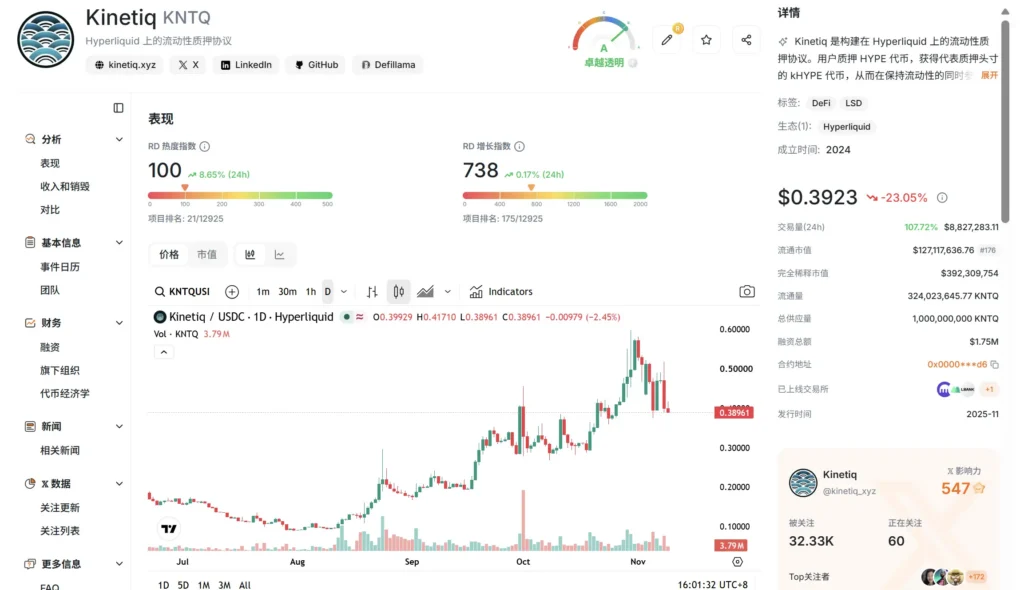
Kinetiq’s Elysium mainnet launched on November 9, 2026, according to reporting published that day. The comparison question is whether this Layer 2 adds a separate token economy to Hyperliquid—or extends the existing one. Its design points to the latter: Elysium uses HYPE for gas and has no Elysium token or points program. Kinetiq has separately proposed using part of the network’s sequencer revenue to buy and burn KNTQ.
What the network is intended to add
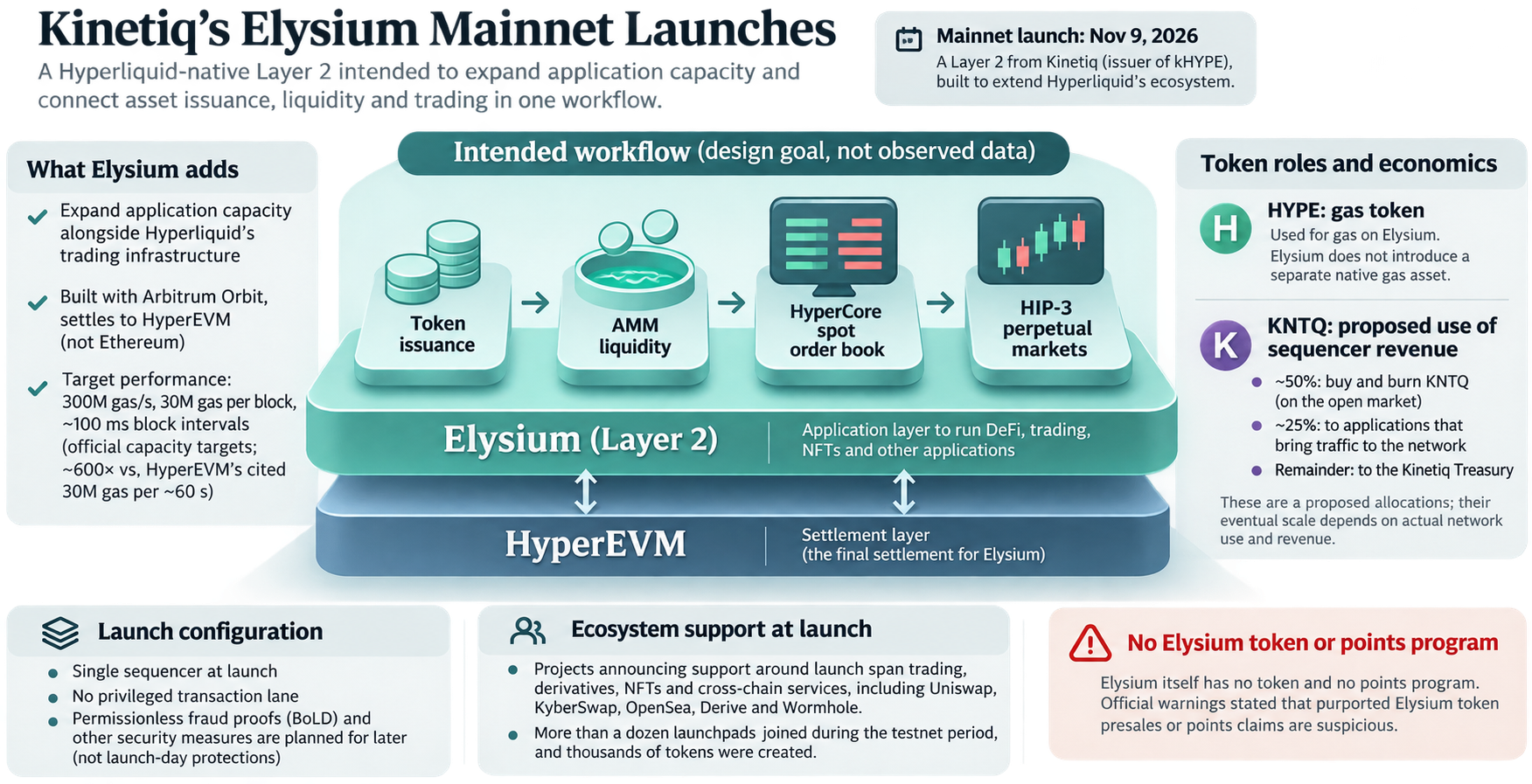
Kinetiq, the issuer of the liquid-staking token kHYPE, built Elysium to expand application capacity alongside Hyperliquid’s trading infrastructure. The reported aim is a path from token issuance and AMM liquidity to HyperCore’s spot order book and HIP-3 perpetual markets. That is an intended workflow, not evidence that spot activity has already increased.
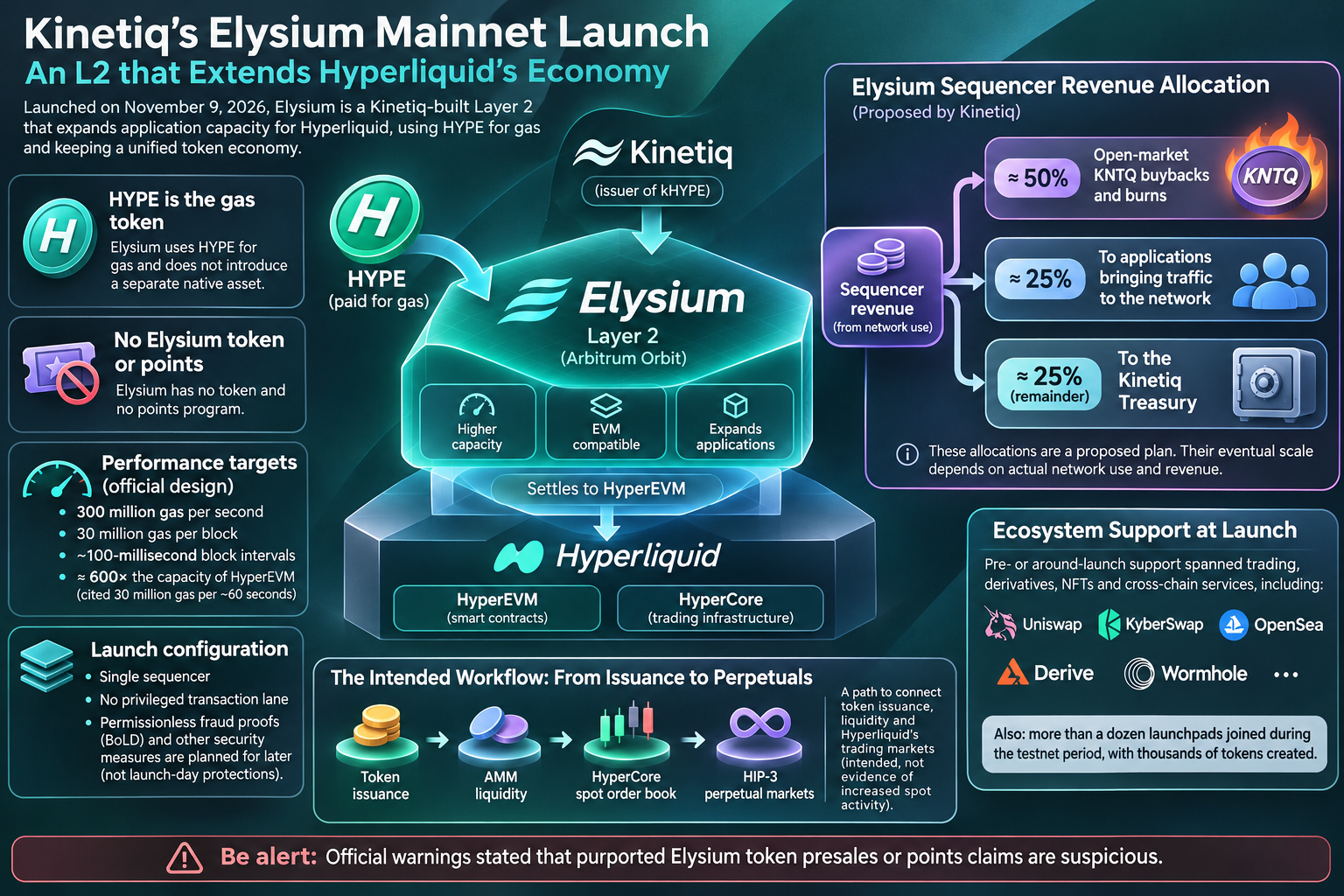
Elysium uses Arbitrum Orbit technology but settles to HyperEVM rather than Ethereum. Its stated targets are 300 million gas per second, 30 million gas per block and roughly 100-millisecond block intervals. The reported 600-fold comparison is an official capacity claim against HyperEVM’s cited 30 million gas per roughly 60 seconds, not a measured application benchmark.
The launch configuration has a single sequencer and no privileged transaction lane. Permissionless fraud proofs based on BoLD, along with other security measures, were listed as later work—not launch-day protections.
Where HYPE and KNTQ fit
HYPE is the gas token. Elysium does not introduce a separate native gas asset. KNTQ has a different proposed role: under Kinetiq’s disclosed plan, about 50% of sequencer revenue would fund open-market KNTQ purchases and burns, about 25% would go to applications bringing traffic to the network, and the remainder would enter the Kinetiq Treasury. Those allocations describe a plan; their eventual scale depends on actual network use and revenue.
The original report said KNTQ rose as much as 30% on the day the news was announced. It did not establish that the proposed mechanism would produce lasting token value.
Launch support versus sustained use
Projects announcing support before or around launch spanned trading, derivatives, NFTs and cross-chain services, including Uniswap, KyberSwap, OpenSea, Derive and Wormhole. The report also described more than a dozen launchpads joining during the testnet period and thousands of tokens being created. Early project counts do not show whether Elysium will strengthen Hyperliquid spot trading.
The distinction matters for token claims, too. Despite the presence of KNTQ and HYPE in the wider ecosystem, Elysium itself has no token or points program. The original report relayed official warnings that purported Elysium token presales or points claims are suspicious.