
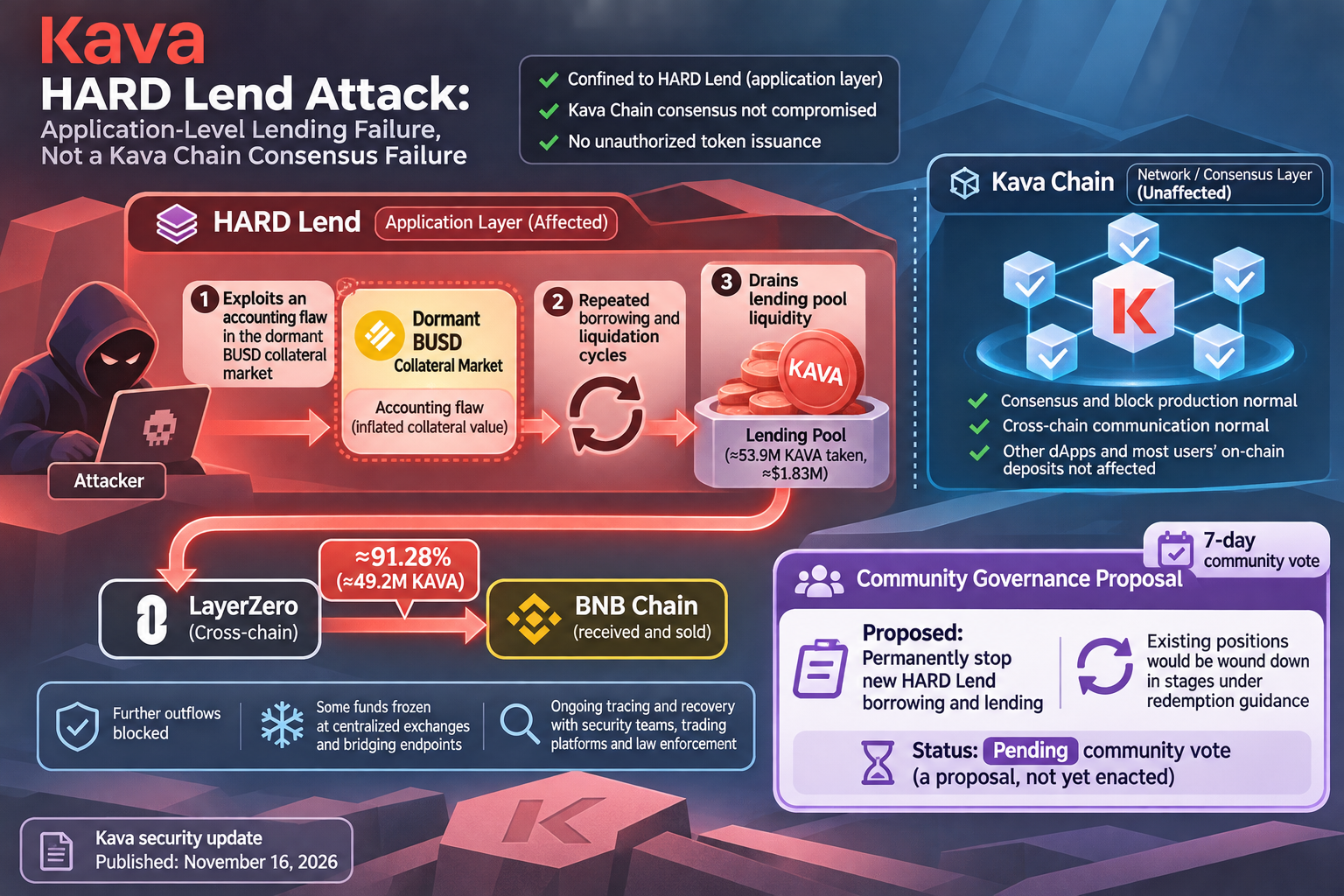
In a report published on November 16, 2026, Kava said an attack on its HARD Lend application had moved approximately 53.9 million KAVA, valued at about $1.83 million, out of a lending pool. The distinction is between an application-level lending failure and a failure of the Kava Chain network itself: Kava said the incident was confined to HARD Lend and did not compromise network consensus or cause unauthorized token issuance.
What happened to the lending pool?
According to Kava’s security update, the attacker exploited an accounting flaw in a dormant BUSD collateral market. By inflating the recorded value of BUSD collateral, the attacker gained borrowing capacity and repeatedly used borrowing and liquidation cycles to drain available pool liquidity.
On-chain data cited in the report indicated that about 49.2 million KAVA, or 91.28% of the tokens taken, were transferred through LayerZero to BNB Chain and sold. Kava said it had blocked further outflows and that some funds had been frozen at centralized exchanges and bridging endpoints as of November 16. Contributors were working with security teams, trading platforms and law enforcement to trace the funds and seek their return.
What would the governance proposal change?
Kava launched a seven-day community governance proposal to permanently stop new HARD Lend borrowing and lending. If approved, existing positions would instead be wound down in stages under redemption guidance. The shutdown was a proposal, not a rule already enacted when the report was published.