
How would a quantum-resistant upgrade affect different blockchain systems? In a report covered on November 19, 2026, the International Organization of Securities Commissions (IOSCO) warned that the transition could reduce transaction capacity while leaving some older components exposed. No known quantum computer can break the cryptography securing these networks today, but IOSCO urged firms to prepare because migration could take years.
For layer-1 networks, IOSCO said some quantum-resistant transaction signatures are much larger than current ones. Fewer transactions could then fit in a block, potentially increasing congestion, fees and storage needs. IOSCO cited an experiment in which a test version of Solana ran about 90% slower with quantum-resistant signatures. Layer-1 cryptography also helps networks agree on which blocks to add, so changing transaction authorization alone would not address every dependency. Bitcoin advocate Samson Mow raised a related concern in April 2026, warning that larger signatures could reduce Bitcoin’s throughput and that rushed fixes might introduce vulnerabilities.
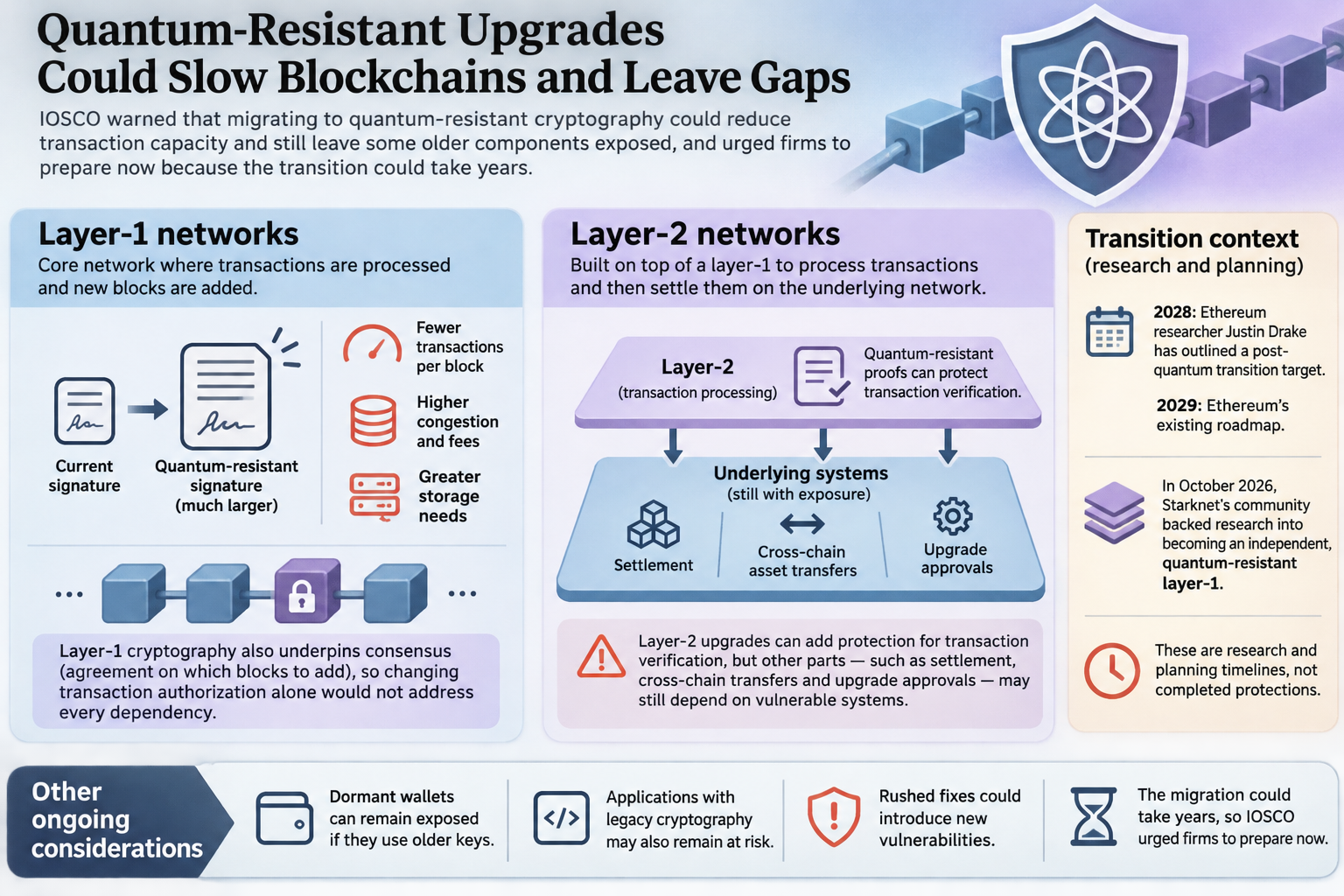
For layer-2 networks, quantum-resistant proofs could protect transaction verification while settlement, cross-chain asset transfers or upgrade approvals still depend on vulnerable systems, IOSCO said. Dormant wallets and applications using older keys could also remain exposed after a network upgrade. In October 2026, Starknet’s community backed research into becoming an independent, quantum-resistant layer-1, amid concerns about dependence on Ethereum’s security-upgrade timeline. Ethereum researcher Justin Drake has outlined a 2028 post-quantum transition target, ahead of the network’s existing 2029 roadmap. These are research and planning timelines, not completed protections.