As reported on November 19, 2026, Pearl had activated its proposed FP8 upgrade, PIP-3, on a testnet. The comparison with Bitcoin is not simply about which network has more computing power. It is whether Pearl can use GPU work performed for paying AI customers to help secure a proof-of-work (PoW) chain—and whether doing so is economical in practice.
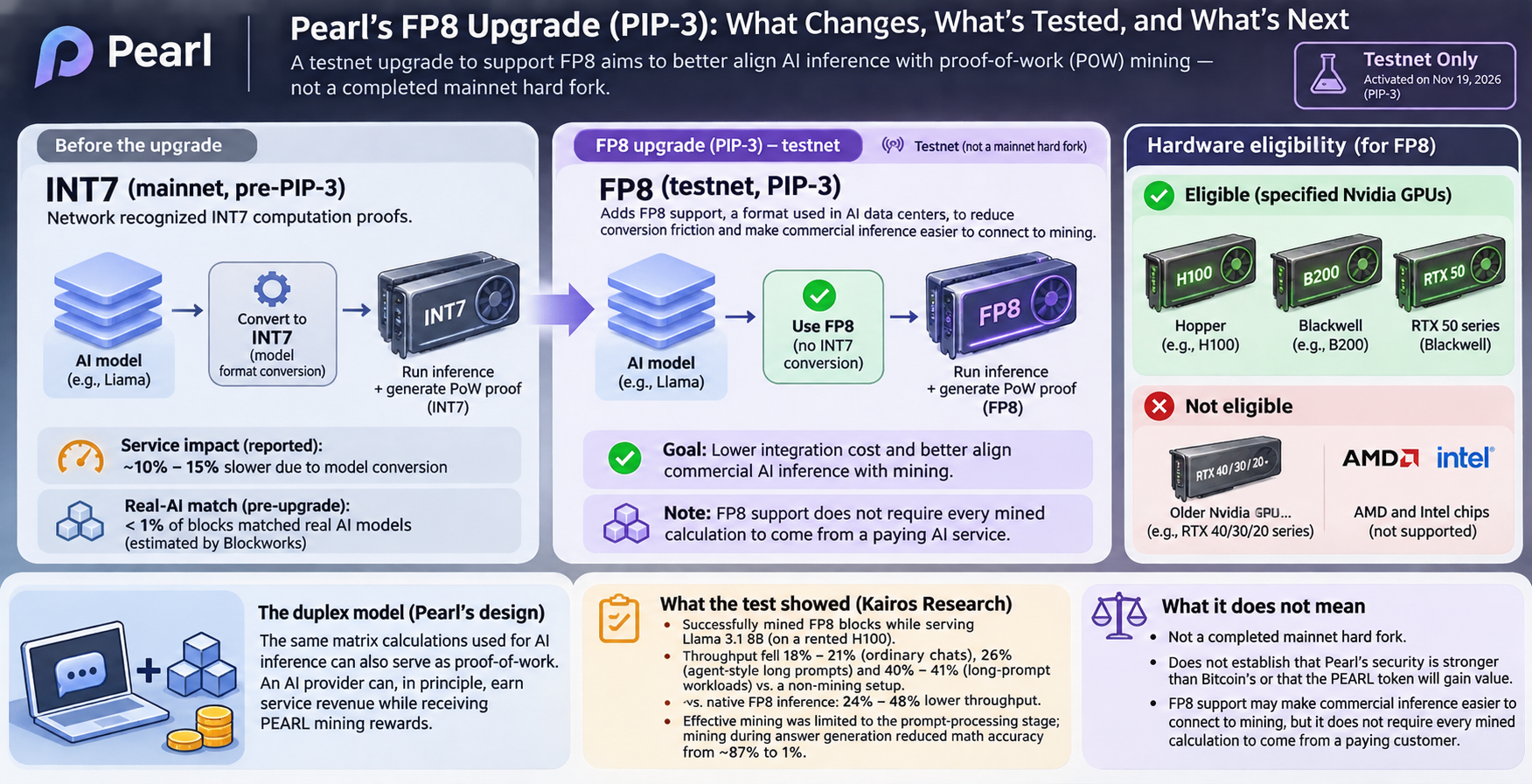
Pearl’s proposed duplex model lets matrix calculations used in AI inference also serve as evidence in the competition to produce blocks. In principle, an AI provider could earn service revenue while receiving PEARL mining rewards. That differs from Bitcoin mining, whose dedicated hardware is used to compete for block rewards and transaction fees. It does not, however, establish that Pearl’s security is stronger or that its token will gain value.
What FP8 would change
Before the upgrade, Pearl’s mainnet recognized INT7 computation proofs. The article reports that requiring AI providers to convert models to that format could slow service by 10%–15%. PIP-3 instead supports FP8, a format used in AI data centers. But the testnet change was not yet a completed mainnet hard fork. The described hardware restrictions would also exclude older Nvidia GPUs and AMD and Intel chips, while admitting specified Nvidia Hopper and Blackwell hardware, including the H100, B200 and RTX 50 series.
The change addresses a distinction central to Pearl’s design: a miner can generate otherwise useless matrix calculations to win blocks without serving an AI customer. Blockworks estimated that, before the upgrade, fewer than 1% of blocks matched real AI models. FP8 support may make commercial inference easier to connect to mining; it does not require every mined calculation to come from a paying service.
What the test showed—and did not show
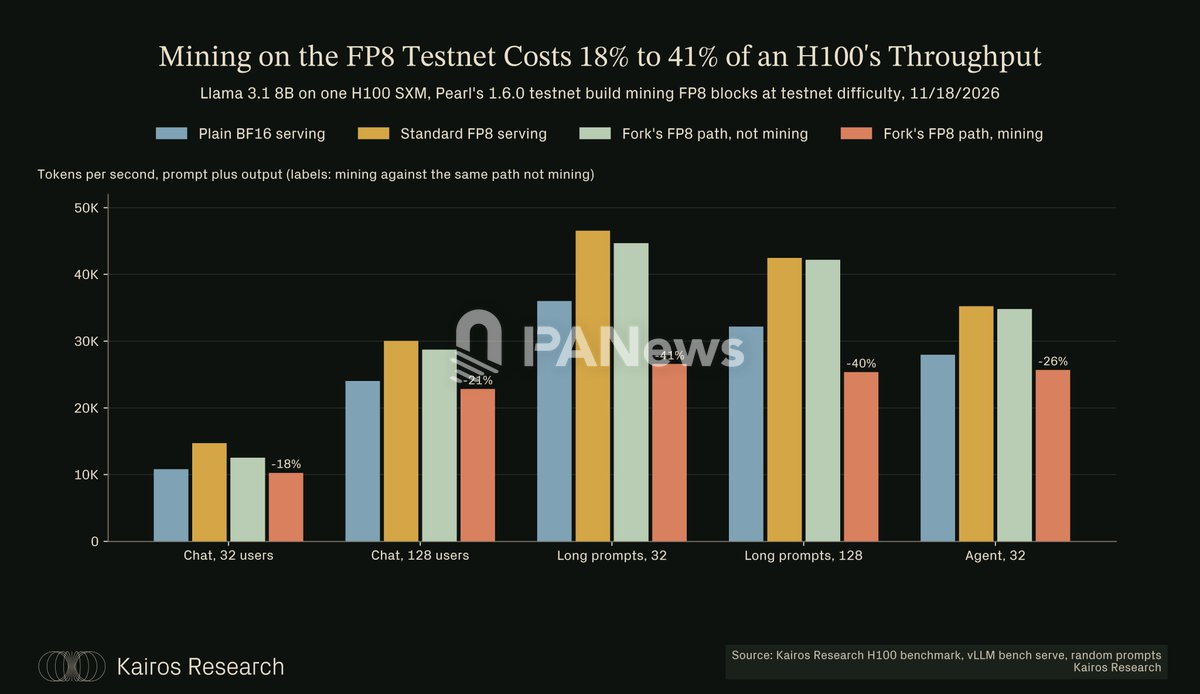
Kairos Research, which held PEARL, tested the upgrade using a rented H100 and Llama 3.1 8B. It reported successfully mining FP8 blocks while serving the model. Against its own non-mining setup, throughput fell 18%–21% for ordinary conversations, 26% for agent-style long prompts and 40%–41% for long-prompt workloads. Against native FP8 inference, the reported reduction was 24%–48%. Those results were less favorable than the 1%–5% performance cost Pearl had projected.
Kairos also found that effective mining was limited to the prompt-processing stage. Mining during answer generation reduced accuracy on its math evaluation from about 87% to 1%. These are results from a particular test setup, not a measurement of every AI provider or a prediction of future software performance.
Supply and security questions
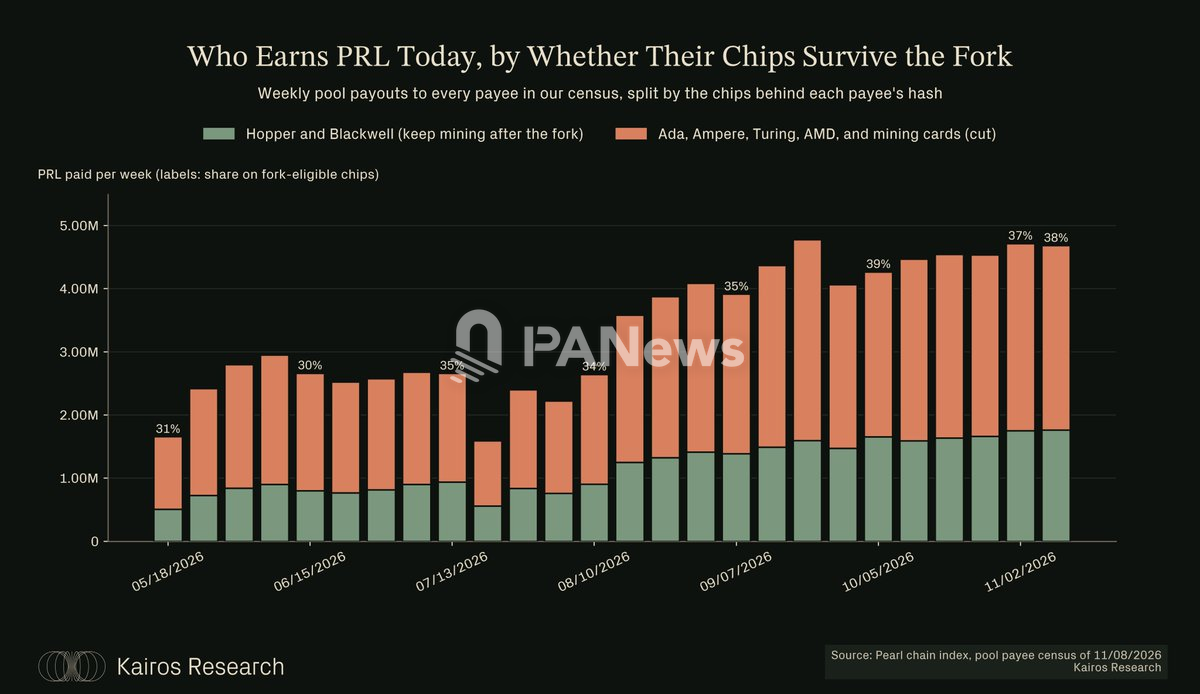
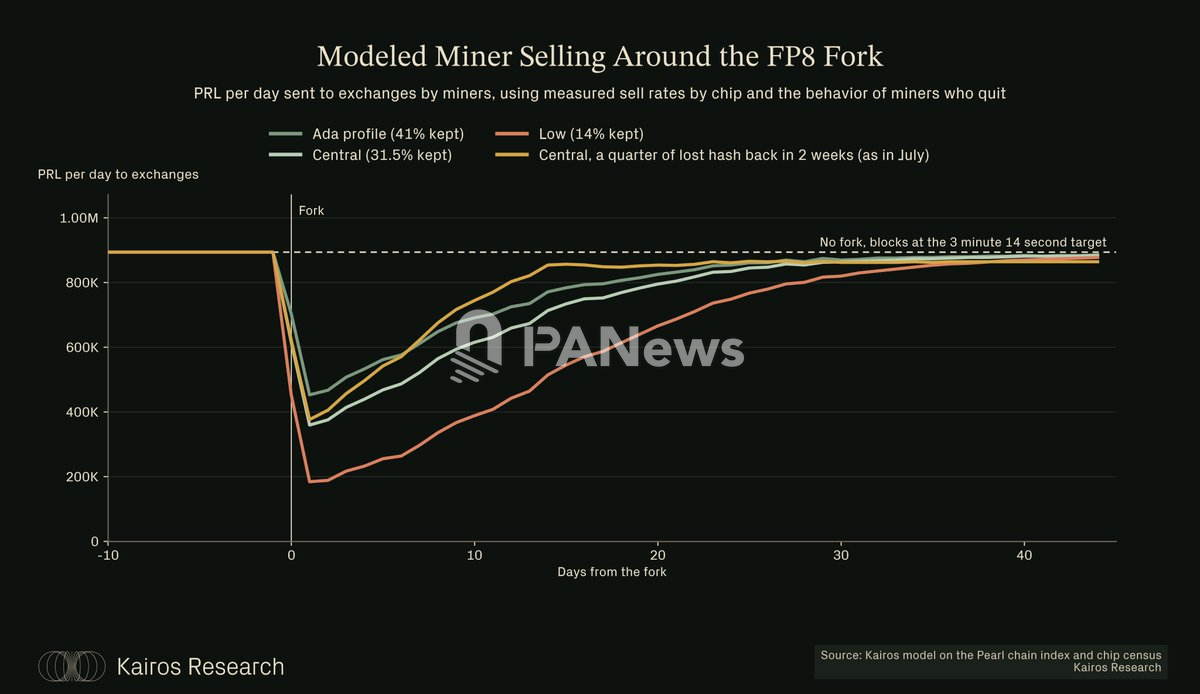
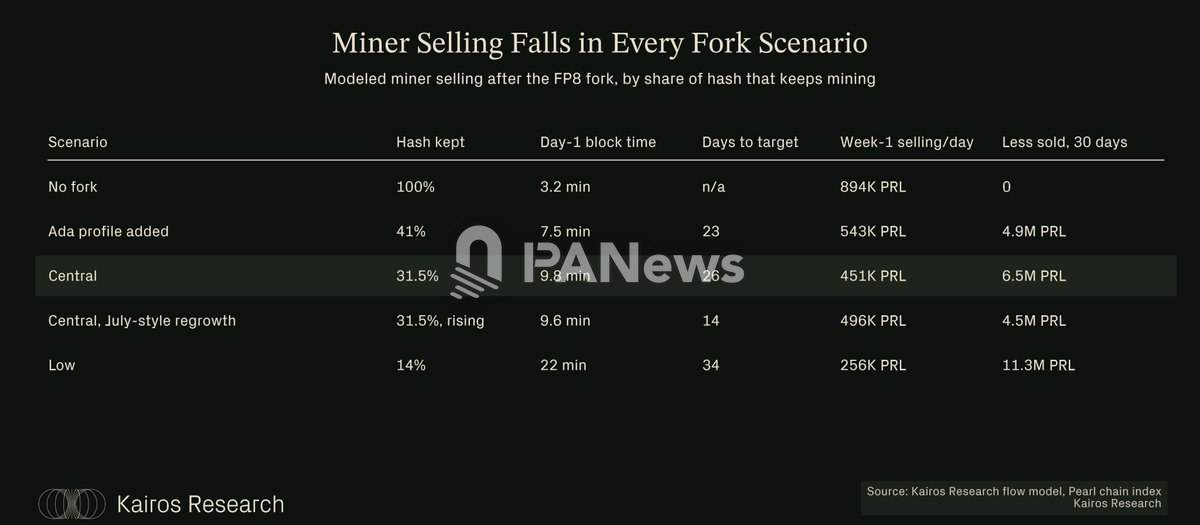
Kairos estimated that Hopper and Blackwell chips represented about 37% of network computing power across the pools it examined. Its model projected that removing older hardware at a mainnet fork would slow block production before a difficulty adjustment, reducing miners’ aggregate sales by about 6.5 million PEARL over the first 30 days. That is a modeled outcome, not an enacted supply cut or a guaranteed reduction in selling.
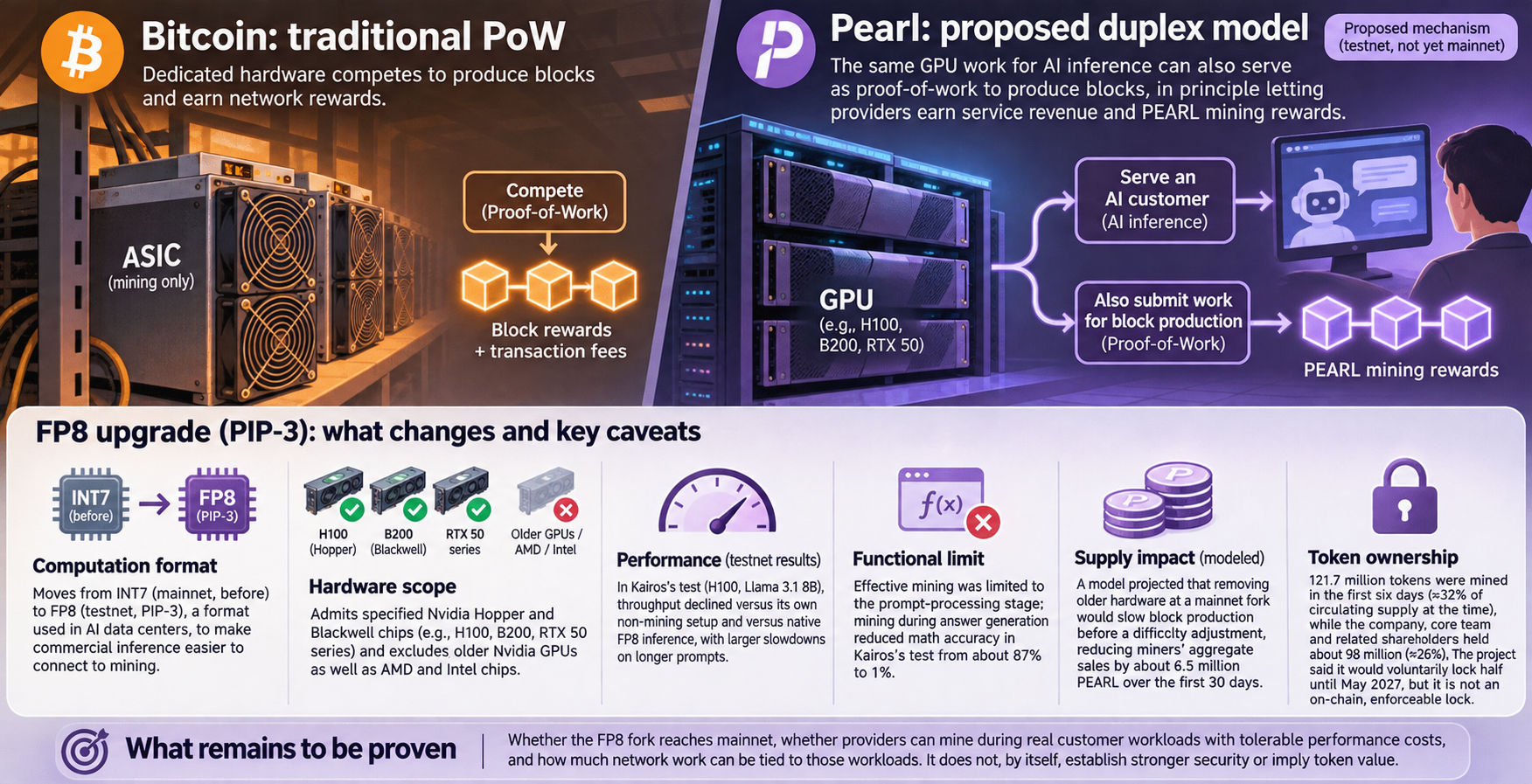
Token ownership raises a separate question. The article reports that 121.7 million tokens were mined in Pearl’s first six days, roughly 32% of the circulating supply at the time, while the company, core team and related shareholders held about 98 million, or 26%. The project said it would voluntarily lock half of those holdings until May 2027; critics questioned the strength of that commitment because, according to the article, it was not enforced by an on-chain smart-contract lock.
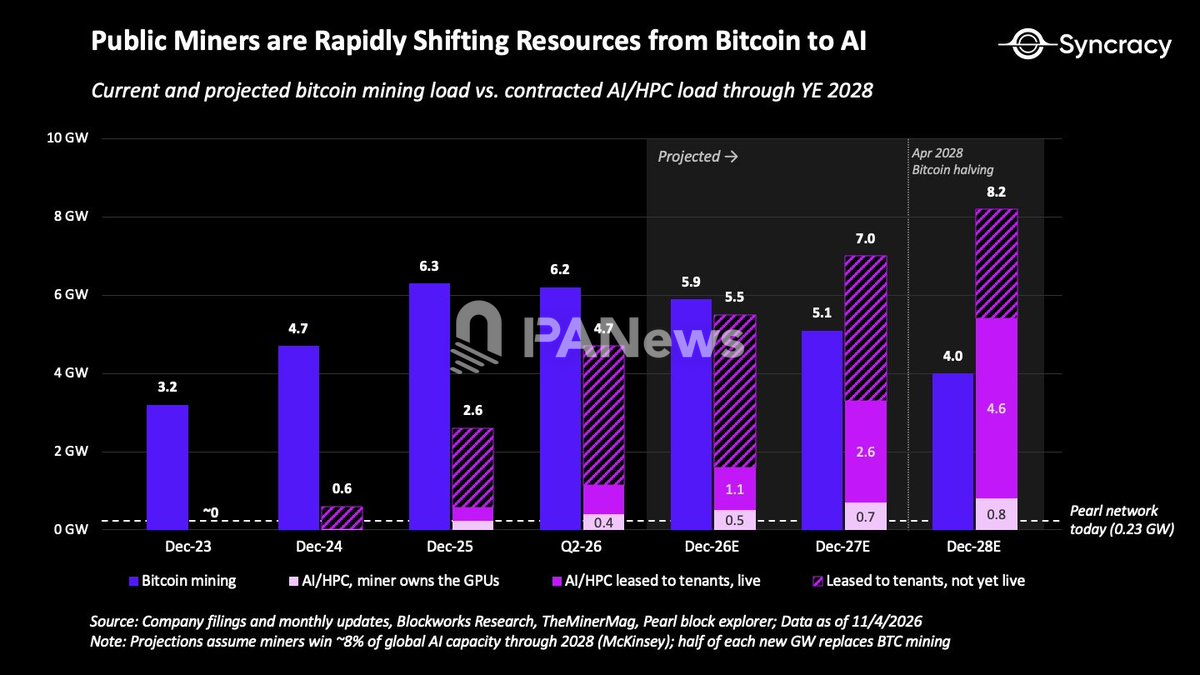
Syncracy Capital has advanced a more ambitious scenario in which Pearl’s computing and energy footprint eventually exceeds Bitcoin’s. That remains a thesis, not an observed result. The nearer tests are whether the FP8 fork reaches mainnet, whether providers can mine during real customer workloads with tolerable performance costs, and how much network work can be tied to those workloads.