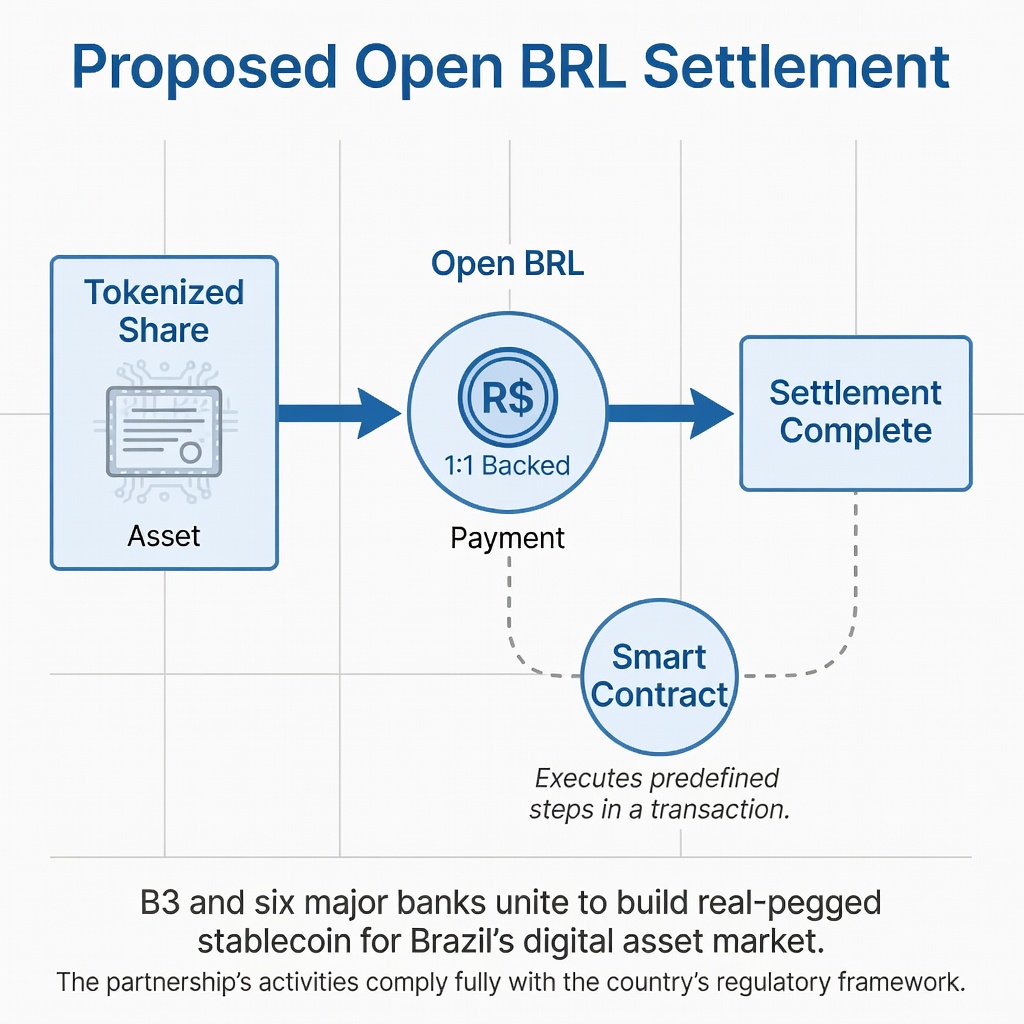
Brazilian stock exchange B3 and six banks are developing Open BRL, a real-pegged stablecoin intended to settle transactions across institutions. In a report published on November 27, 2026, at 06:43 EST, Luiz Masagão, B3’s vice president of products, said the platform was expected to begin operating in the first quarter of 2027. The participating banks are Bradesco, BTG Pactual, Itaú Unibanco, Safra, Santander and XP.
A shared token alongside banks’ own tokens
B3 and the banks had each been pursuing separate digital asset projects when discussions began roughly three months before the report. The obstacle, Masagão explained, was acceptance: a bank can issue a stablecoin, but a counterparty need not accept it for a transfer. Proprietary tokens would still serve internal operations and specific uses. Open BRL is meant to give institutions a common token for transfers and settlement, with B3 acting as a neutral intermediary.
Under the initial plan, Banco B3 would issue Open BRL and hold the deposits backing it, with R$1 on deposit for every unit issued. B3 would manage the technology. A committee representing all partners would set operating rules and prices and make technology decisions. The partners had not disclosed their total capital commitment.
Other banks and financial firms would be eligible to join once operations begin. The partners aim to open the platform to Brazil’s entire financial market and may consider making it a standalone entity as it grows.
How Open BRL would settle tokenized securities
B3 is preparing a platform to represent shares digitally. A tokenized share would represent the asset being traded; Open BRL would provide the means to pay for it. Transfers between blockchain wallets could also trigger smart contracts that execute predefined steps in a transaction without manual intervention. Masagão described the project as an extension of B3’s infrastructure role from traditional capital markets to digital assets.
B3 also participates in a tokenization working group organized by Brazil’s securities regulator, the CVM. According to Masagão, the partners had informed the central bank, and the CVM supported the project, particularly given its connection to the regulator’s tokenization work. He said the initiative was being developed within Brazil’s regulatory framework.