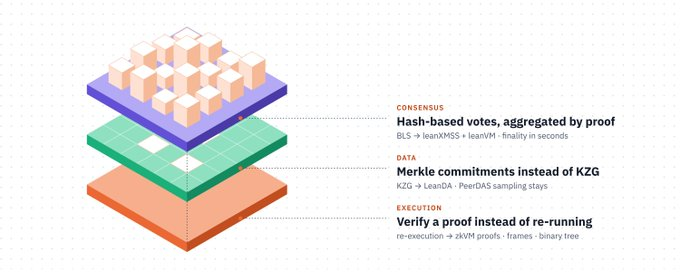
Reported November 10, 2026, at 10:59 a.m. UTC+8. This is a historical account of plans and proposals as they stood at publication.
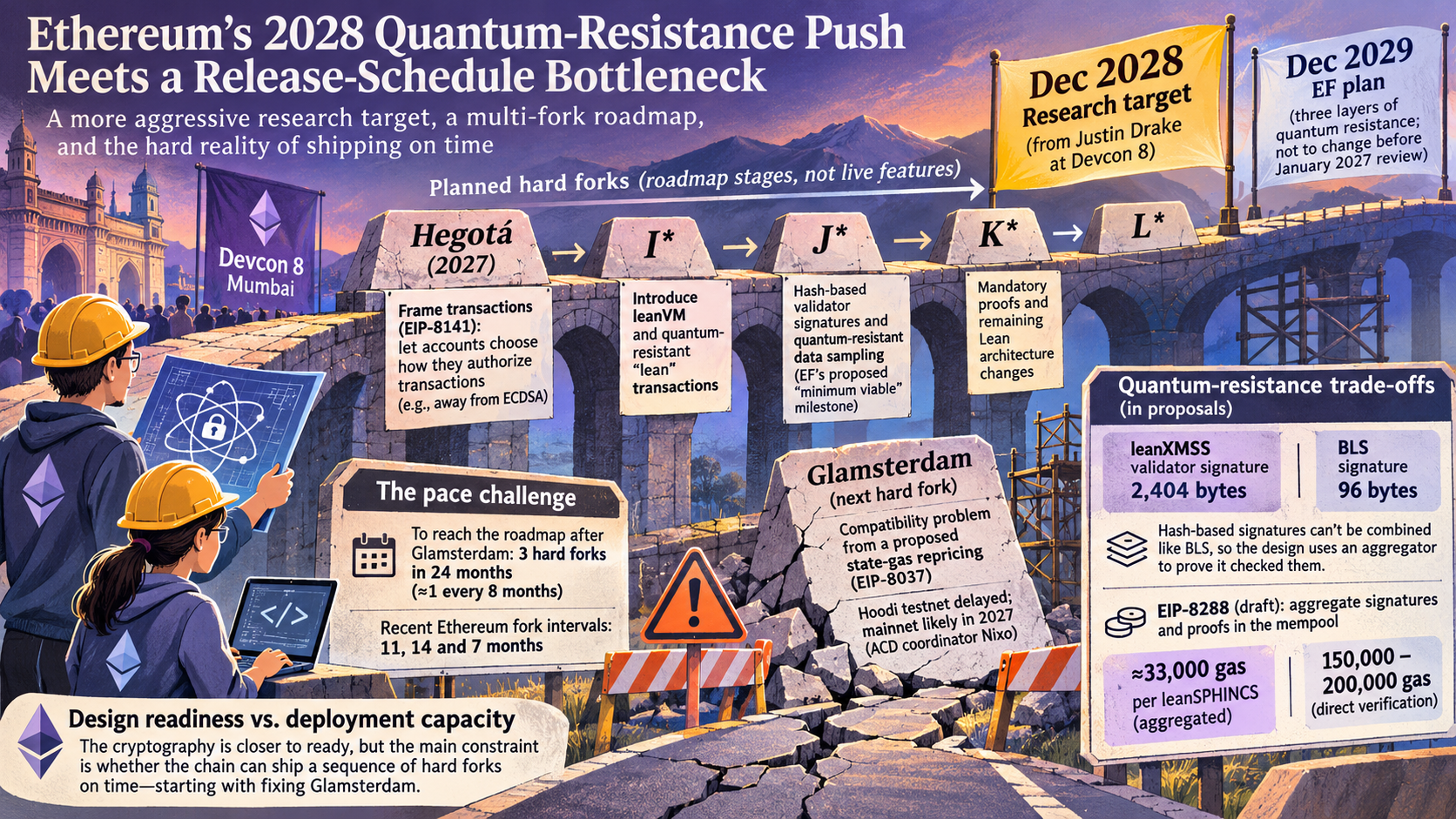
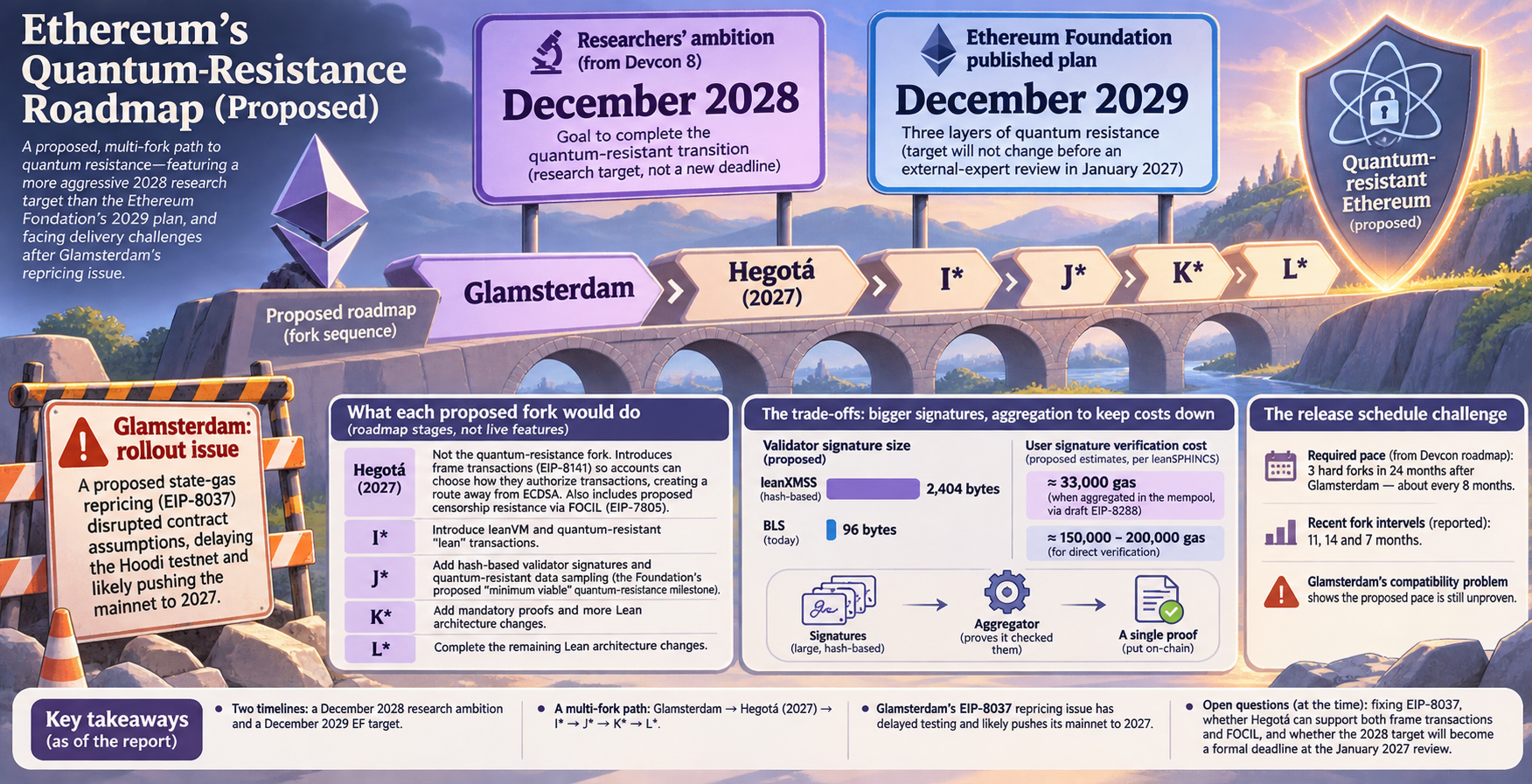
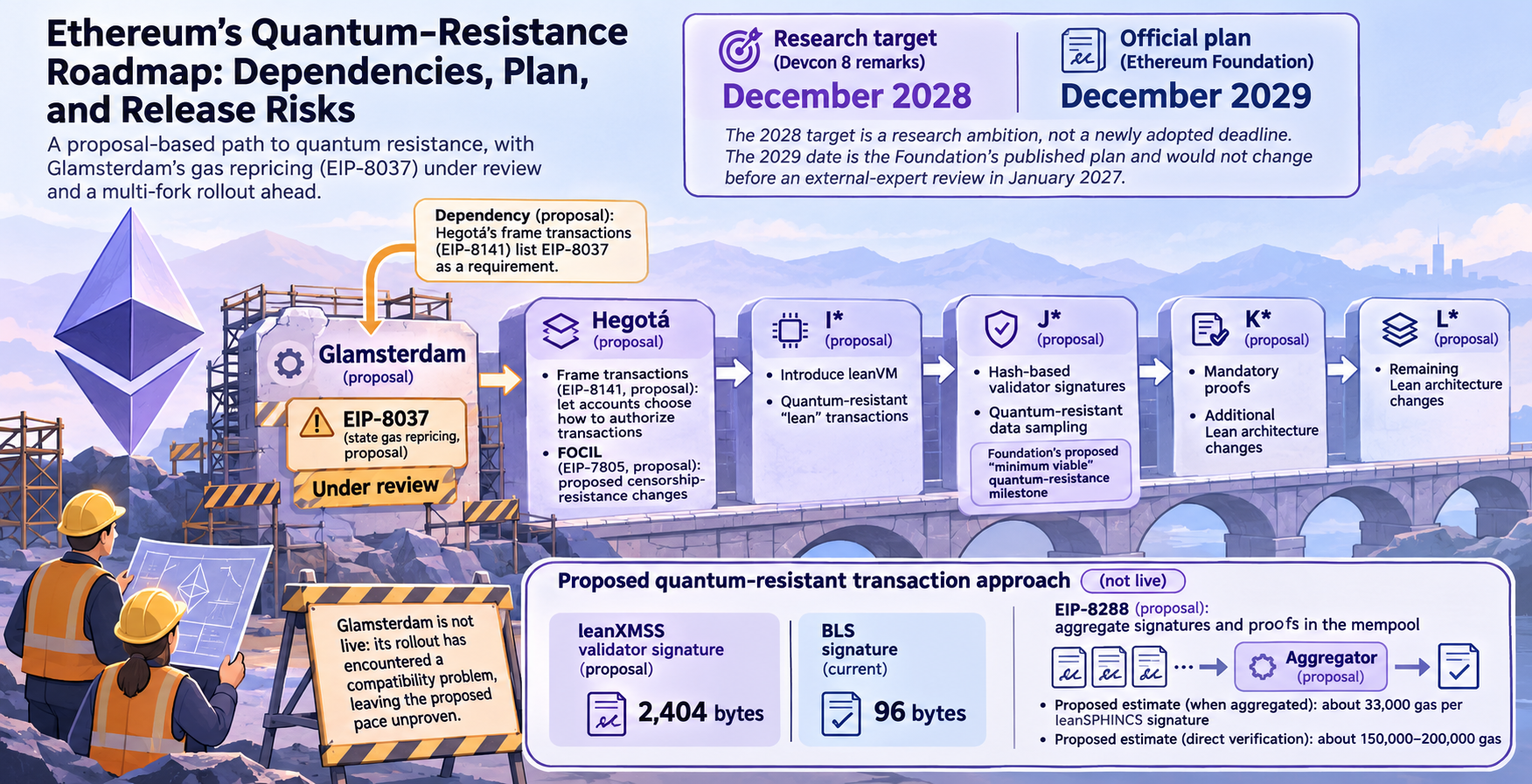
Ethereum researchers are working toward a quantum-resistant transition by December 2028, according to Justin Drake’s remarks at Devcon 8 in Mumbai. That is a more aggressive target than the Ethereum Foundation’s published plan, which set December 2029 for three layers of quantum resistance and said the date would not change before an external-expert review in January 2027. The 2028 target was a research ambition, not a newly adopted deadline.
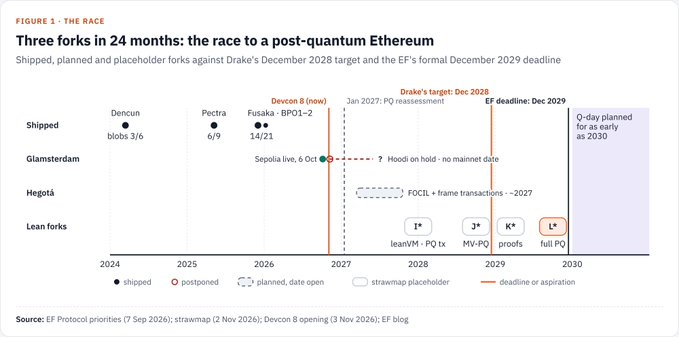
The comparison is between design readiness and deployment capacity. The roadmap described at Devcon would require three hard forks in the 24 months after Glamsterdam—roughly one every eight months. The article reports that recent Ethereum fork intervals were 11, 14 and seven months. It also reports that Glamsterdam’s rollout had encountered a compatibility problem, leaving the proposed pace unproven.
What would change?
Today’s roadmap relies on a sequence of proposed forks rather than a single switch to quantum resistance:
- Hegotá, planned for 2027, is not itself the quantum-resistance fork. Its proposed frame transactions, EIP-8141, would let accounts choose how they authorize transactions, creating a route away from ECDSA without requiring a fork for every replacement signature scheme.
- I* would introduce leanVM and quantum-resistant “lean” transactions. J* would add hash-based validator signatures and quantum-resistant data sampling—the Foundation’s proposed “minimum viable” quantum-resistance milestone.
- K* and L* would add mandatory proofs and the remaining Lean architecture changes, according to the draft roadmap.
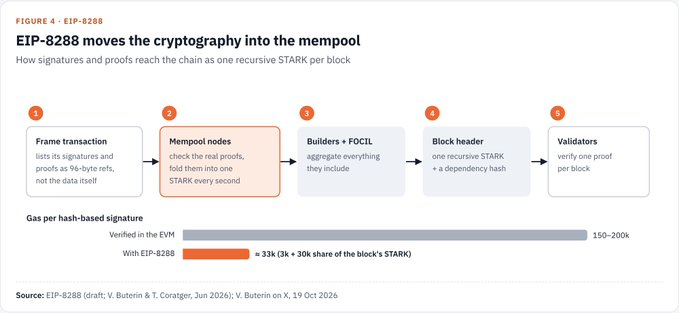
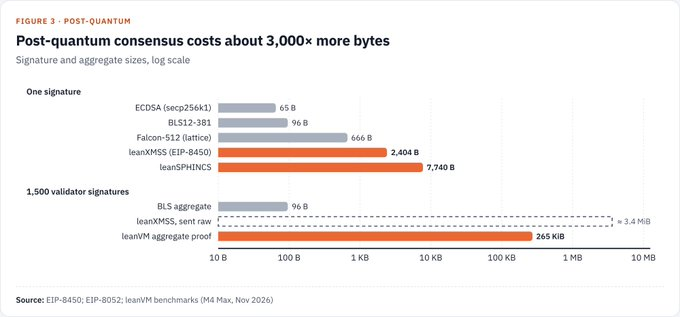
These are roadmap stages, not features already live on Ethereum. The trade-off is substantial: the article gives a proposed leanXMSS validator signature as 2,404 bytes, versus 96 bytes for a BLS signature. Because hash-based signatures cannot be combined in the same way as BLS signatures, the design calls for an aggregator to prove it checked them. On the user side, draft EIP-8288 would aggregate signatures and proofs in the mempool rather than put each large item on-chain. Its cited estimate is about 33,000 gas per leanSPHINCS signature when aggregated, compared with 150,000–200,000 gas for direct verification. Those are proposal estimates, not measured mainnet fees; the EIP remained a draft, with parts still unspecified.
Why the release schedule matters
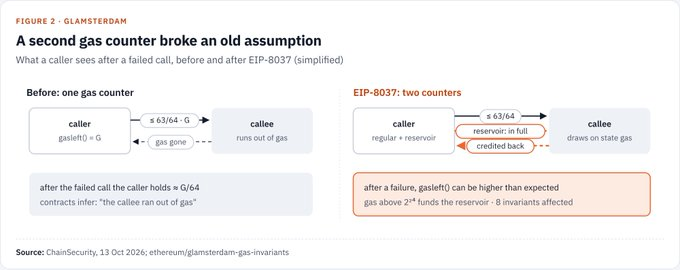
Glamsterdam illustrates a different kind of constraint. The article says a proposed state-gas repricing under EIP-8037 disrupted assumptions made by deployed contracts. ChainSecurity warned that changed gas behavior could allow error handlers previously stopped by out-of-gas conditions to finish, bypassing common interference checks. The Hoodi testnet was delayed without a new Hoodi or mainnet date; All Core Devs coordinator Nixo wrote that the issue would likely push Glamsterdam’s mainnet release into 2027.
That matters to the later roadmap because Hegotá’s frame-transaction proposal lists EIP-8037 as a requirement. Hegotá also includes proposed censorship-resistance changes under FOCIL (EIP-7805). Neither proposal should be mistaken for an enacted rule.
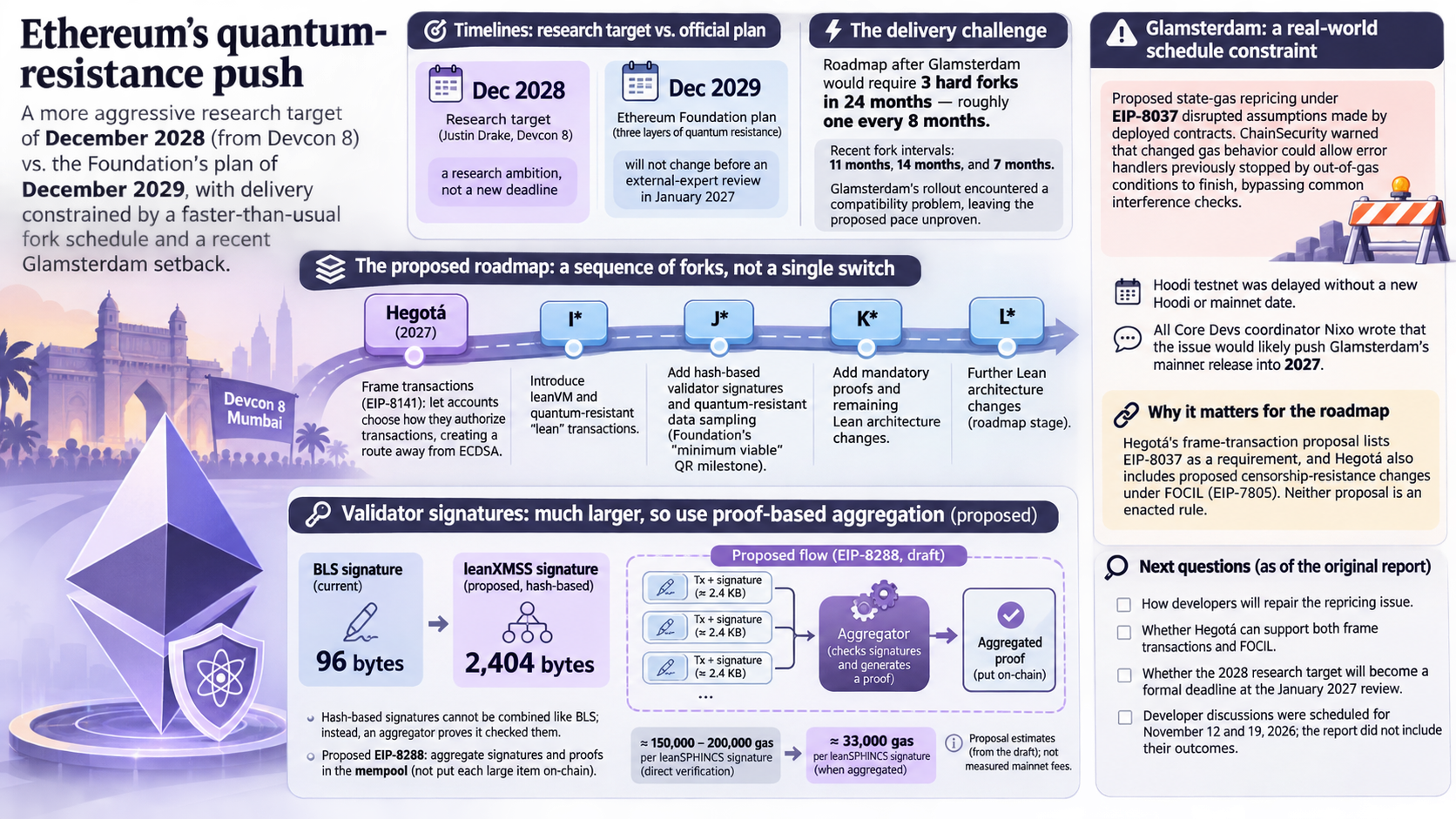
As of the original report, the immediate questions were how developers would repair the repricing issue, whether Hegotá could support both frame transactions and FOCIL, and whether the 2028 research target would become a formal deadline at the January 2027 review. The source listed developer discussions for November 12 and 19, 2026; it did not report their outcomes.
Source: panewslab.com (originally published 2026-11-10 10:59 UTC+8)