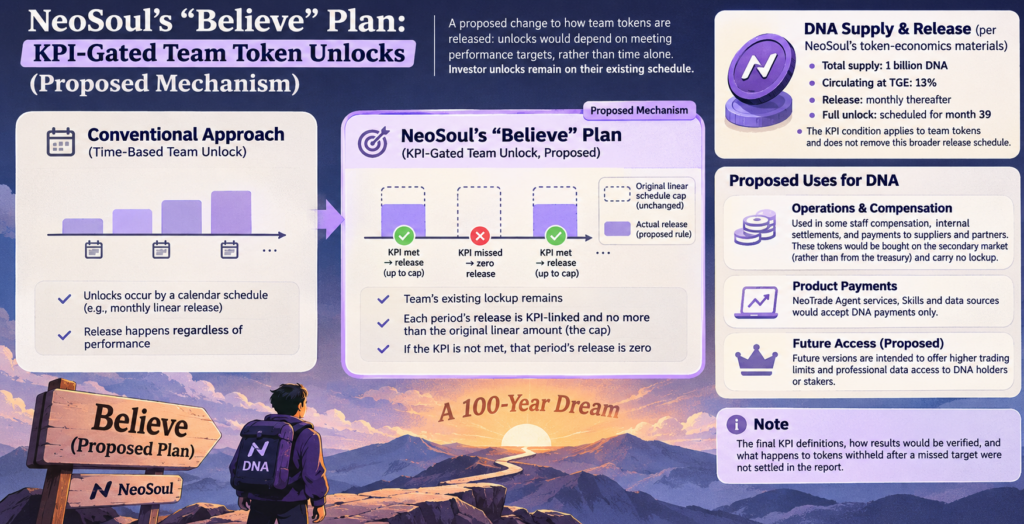
As reported on November 10, 2026, NeoSoul’s Believe plan proposed a different rule for team-token unlocks: meeting performance targets would be required for a release, rather than the calendar alone. The comparison matters because the plan leaves investor unlocks on their existing schedule.
Team tokens: a cap, not a guaranteed release
Under the plan announced on November 5, the team’s existing lockup remains, but automatic linear unlocks are replaced by KPI-linked releases. In any period, the team could receive no more than the amount allowed by its original linear schedule; if it misses that period’s KPI, the release would be zero. NeoSoul invited community members and KOLs to help formulate the targets.
The final KPI definitions, how results would be verified, and what happens to tokens withheld after a missed target were not settled in the report. Those details matter when comparing the proposed rule with a conventional time-based unlock. Investor unlock arrangements remain unchanged, although early investors who voluntarily extend their lockups would receive an incentive, according to the plan.
Supply and intended use
According to NeoSoul’s token-economics materials, DNA has a total supply of 1 billion tokens. 13% was circulating at the token-generation event, with monthly releases thereafter and full unlock scheduled for month 39. The team’s proposed KPI condition does not remove that broader release schedule.
The plan also calls for DNA to be used in some staff compensation, internal settlements, and payments to suppliers and partners. NeoSoul says tokens used for salaries, partnerships and internal rewards would be bought on the secondary market rather than drawn from its treasury, and would carry no lockup. That describes a proposed source of tokens for those payments, not a guarantee that recipients will hold them.
On the product side, NeoSoul says its NeoTrade Agent services, Skills and data sources would accept DNA payments only. Future versions are intended to offer higher trading limits and professional data access to DNA holders or stakers. These are proposed token uses and future access rules; the report does not establish how much DNA customers will spend on them.