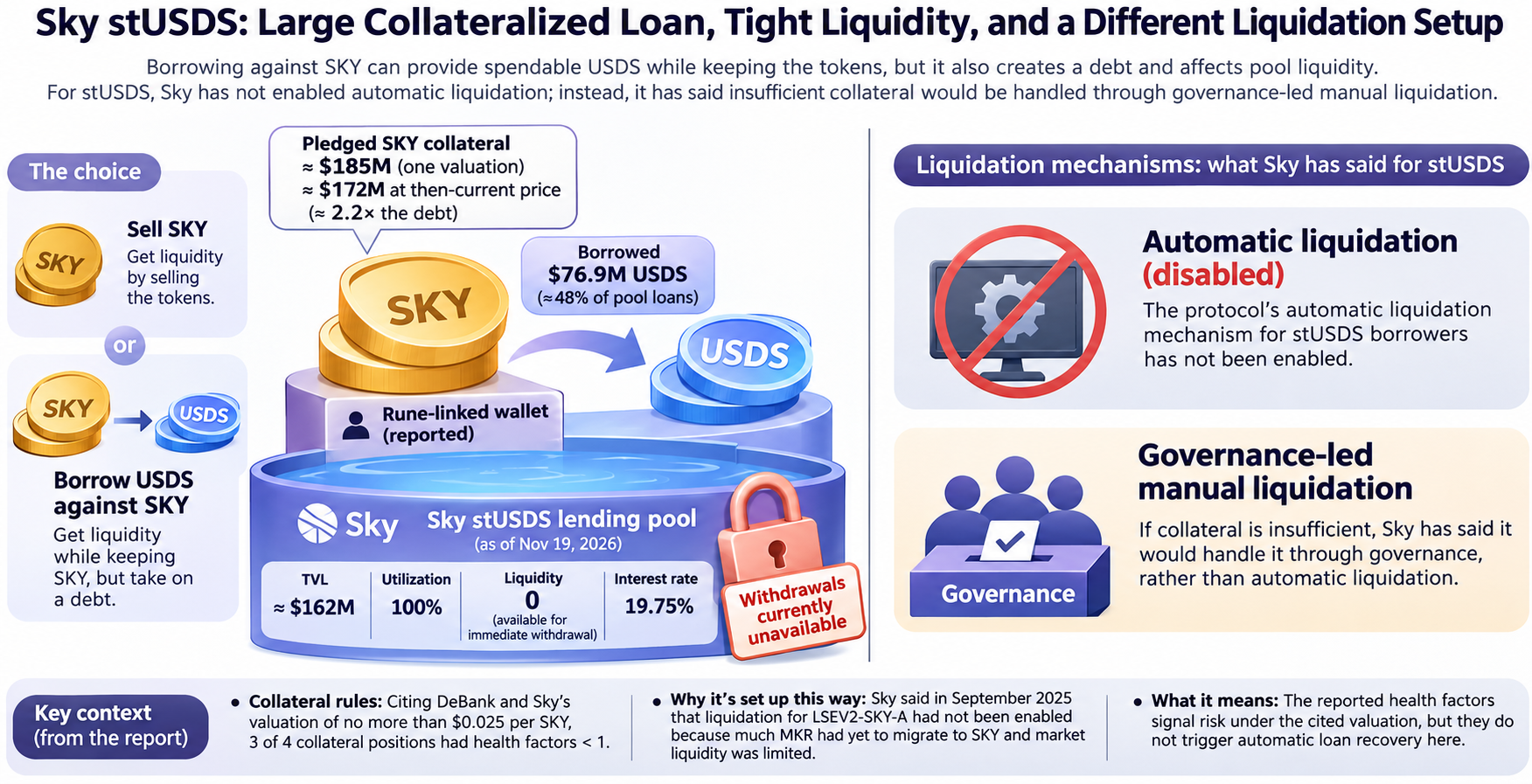
The comparison is between selling SKY for liquidity and borrowing USDS against it. Both can provide spendable funds, but a collateralized loan leaves the borrower holding the tokens and creates a debt that depends on the lending pool’s liquidity and collateral rules.
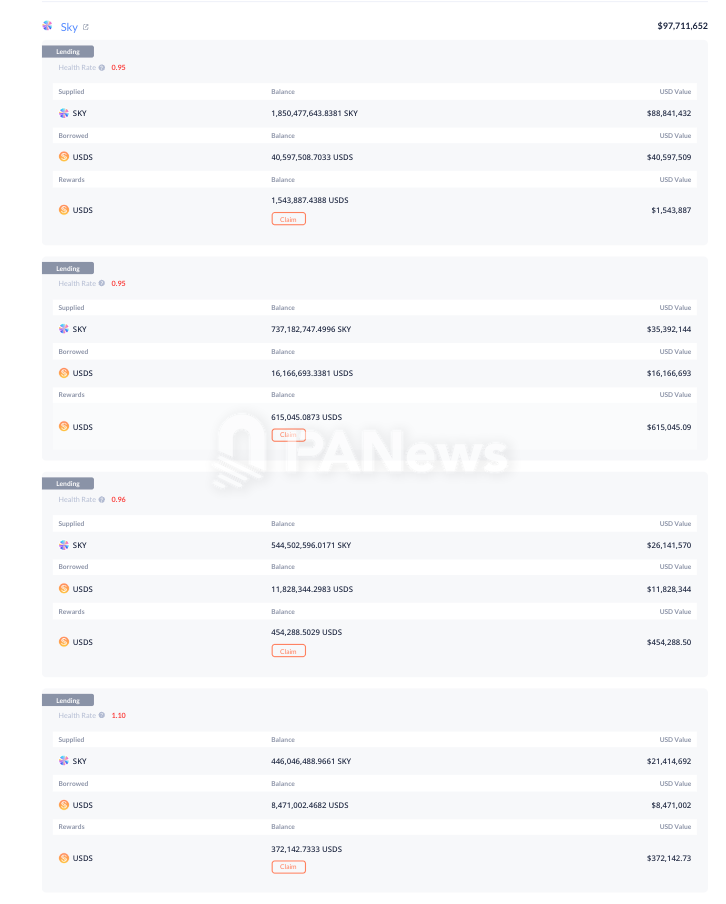
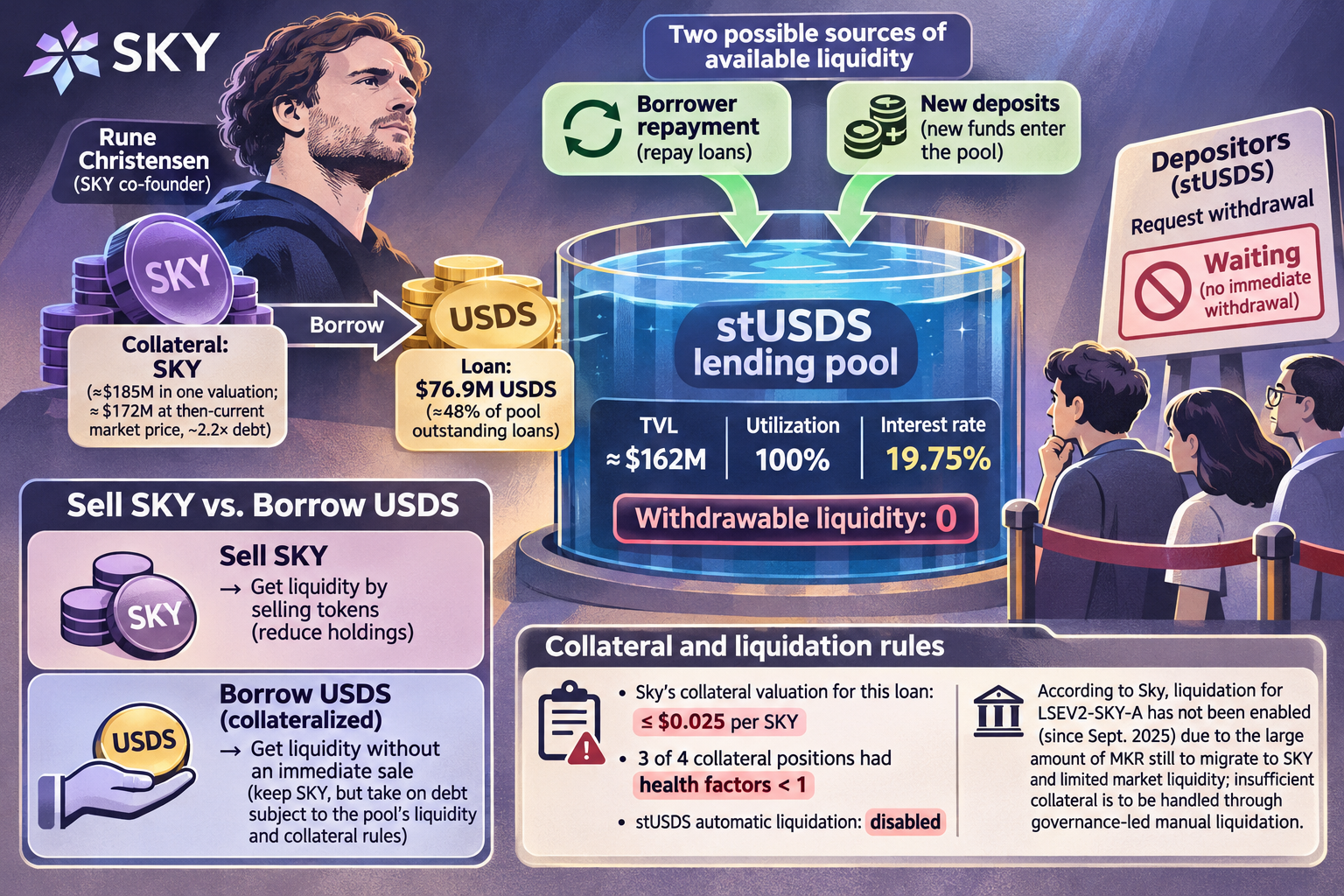
In reporting dated November 19, 2026, PANews described a large loan linked to Sky co-founder Rune Christensen amid a shortage of immediately withdrawable funds in Sky’s stUSDS lending pool. Community user @punkquidity said a wallet associated with Rune had borrowed $76.9 million in USDS against SKY collateral, representing nearly 48% of the pool’s outstanding loans, and had repaid no principal over the preceding six months. The loan has no maturity date, so the lack of principal repayment does not itself violate the protocol’s rules.
What the pool data showed
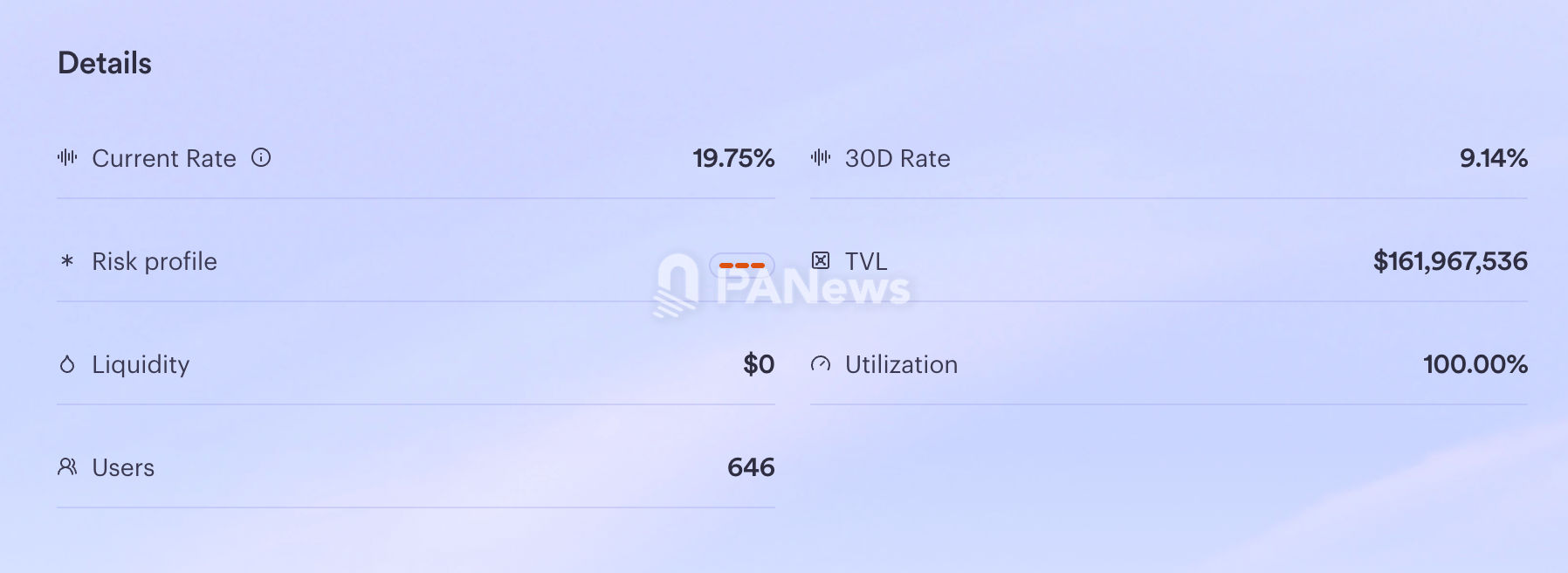
According to Sky’s website, the stUSDS pool had approximately $162 million in total value locked, 100% utilization, no liquidity available for immediate withdrawal and a 19.75% interest rate as of November 19. @punkquidity said the last freely withdrawable funds had been taken out on the evening of November 10. The user also reported a similar period of near-zero withdrawable liquidity on October 31, which ended that evening.
At full utilization, depositors seeking to withdraw must wait for borrowers to repay or for new funds to enter the pool. A higher interest rate may encourage either outcome, but it does not itself make funds immediately withdrawable.

Collateral rules matter as much as collateral value
The report described the pledged SKY as worth about $185 million in one valuation. It also said that, at the then-current market price, the associated wallet’s collateral was worth about $172 million, or roughly 2.2 times its debt. Those figures use different valuation bases and should not be treated as interchangeable.
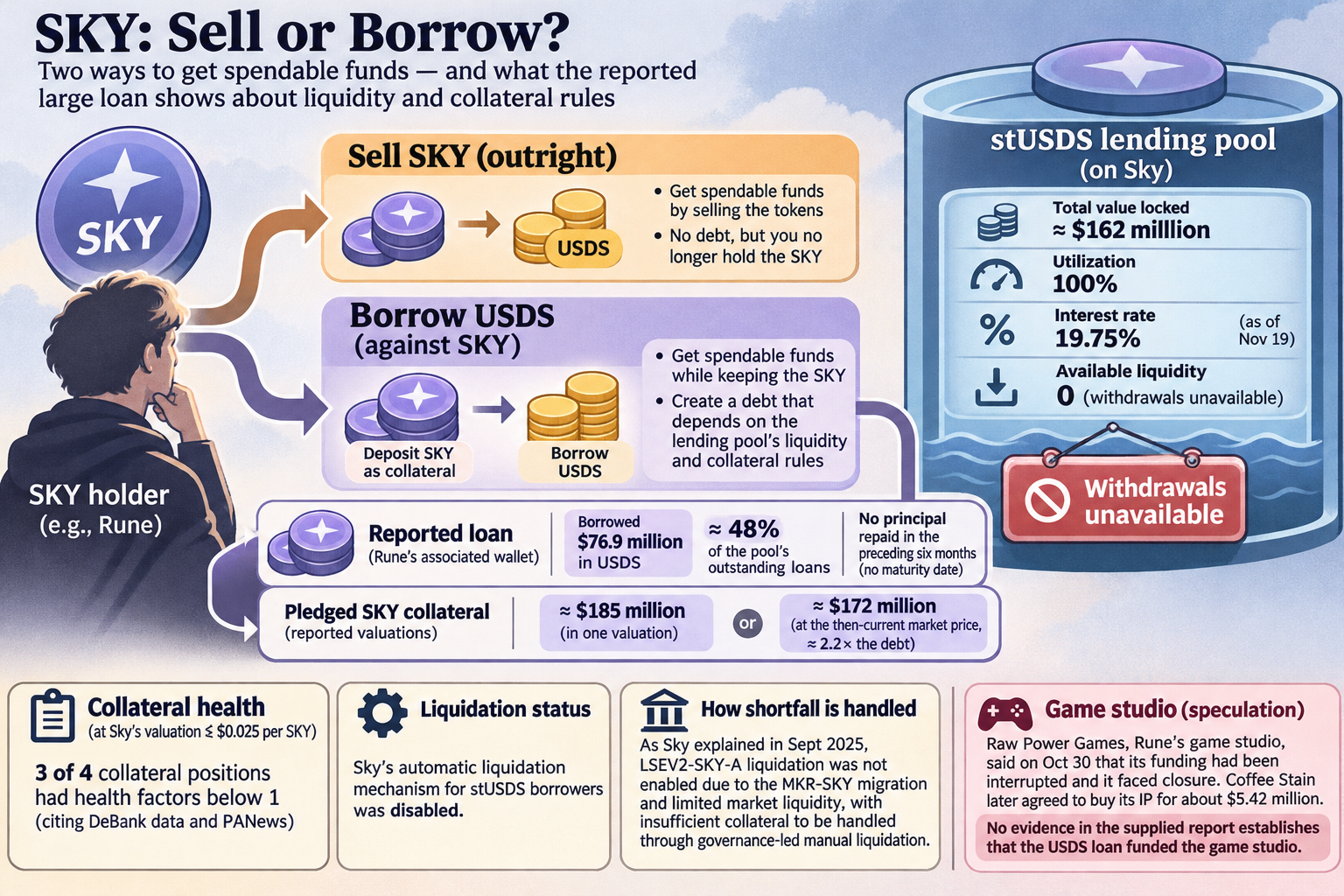
Citing DeBank data and Sky’s collateral valuation of no more than $0.025 per SKY for this loan, PANews reported that three of the wallet’s four collateral positions had health factors below 1. Sky’s automatic liquidation mechanism for stUSDS borrowers was disabled, however, so those positions would not be automatically liquidated. Sky had explained in September 2025, while preparing to launch stUSDS, that liquidation for LSEV2-SKY-A had not been enabled because much MKR had yet to migrate to SKY and market liquidity was limited. Its stated approach was to handle insufficient collateral through governance-led manual liquidation instead.
That distinguishes the case from an ordinary account of collateralized borrowing: the reported health factors signal a risk under the cited valuation, but they do not trigger automatic loan recovery here. It also differs from selling SKY outright. Borrowing provides liquidity without an immediate token sale, while leaving the debt and its effect on pool liquidity in place.
PANews compared the borrowing approach with Curve Finance founder Michael Egorov’s use of CRV as collateral in 2023. That precedent illustrates the sell-versus-borrow choice, not an identical liquidation arrangement.
What remains unproven
Speculation about Rune’s borrowing intensified alongside funding problems at his game studio, Raw Power Games. On October 30, the studio said funding for Chronicles: Medieval had been interrupted, putting the studio at risk of closure and the game’s development in doubt. PANews also reported that Coffee Stain had agreed to buy the studio’s intellectual property for about $5.42 million and take over related development.
No evidence in the supplied report establishes that the USDS loan funded Raw Power Games. The documented issue for stUSDS depositors was the lack of immediately withdrawable pool liquidity; the proposed connection to the game studio remained speculation.