Originally reported by TechFlow on November 9, 2026, at 18:31 (UTC+8). The figures below reflect that reporting period, not current conditions.
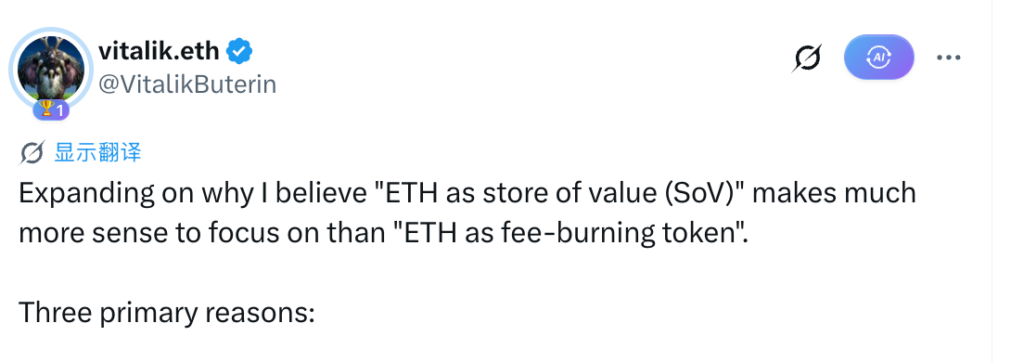
Can ETH be valued by the fees Ethereum burns, or does its case depend more on the network’s long-term properties? A TechFlow article examining a November 8 post by Vitalik Buterin frames these as competing ways to think about ETH—not as two equivalent measures of its value.
The fee-burn case
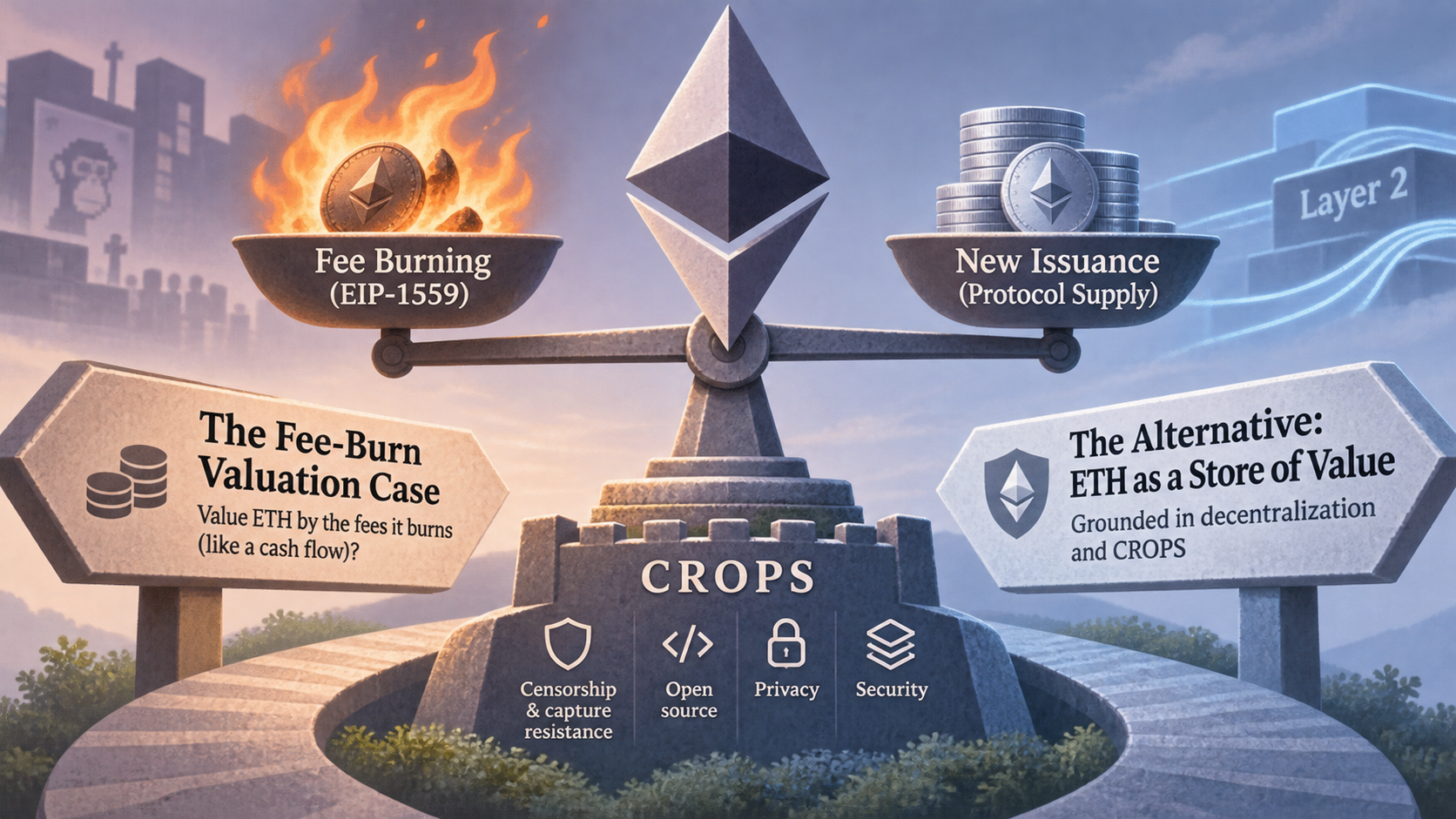
Ethereum’s EIP-1559 mechanism burns some transaction fees. TechFlow says that, during the 2021–2023 bull market, this encouraged a valuation model that treated annual burns like a cash flow: market value would equal yearly burned fees divided by a discount rate. Buterin argued that this did not establish a reliable price floor. According to the article, he pointed to fees generated by speculation within crypto—including a Yuga Labs virtual-land sale that burned $180 million in fees in one day—as activity that could weaken alongside ETH’s price.
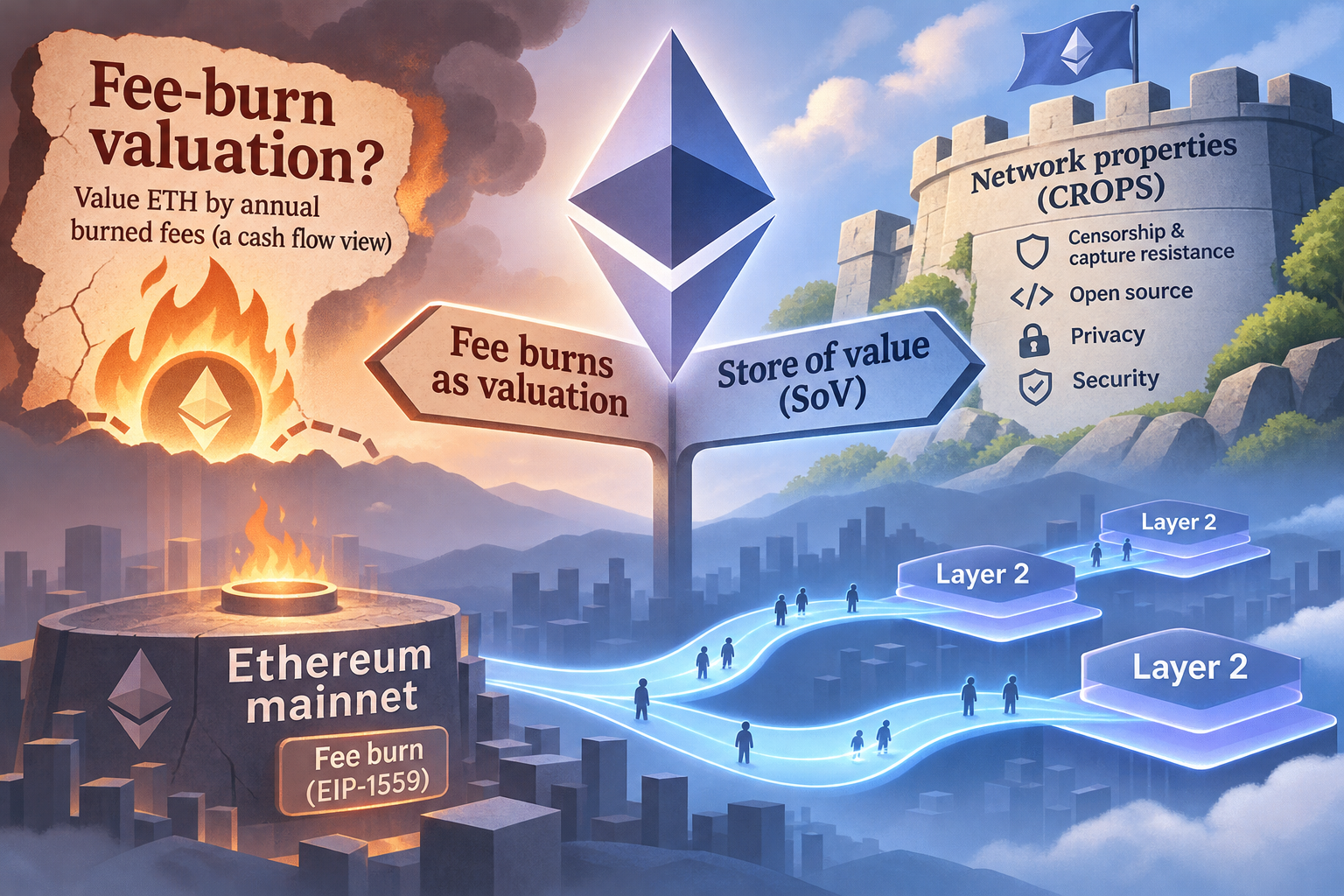
The scale of burning had also changed. TechFlow reported approximately 1.48 million ETH burned in 2022, versus 19,200 ETH in 2026 through November 8. It reported 2,694 ETH, worth roughly $6 million, burned in the preceding 30 days—not enough to offset issuance over that period. The article attributed the decline largely to activity moving from Ethereum mainnet to Layer 2 networks. It also noted six consecutive weeks of net outflows from U.S. spot ETH ETFs at the time of reporting.
TechFlow attributed another comparison to Buterin: at a 4% discount rate, supporting a market capitalization of about $272 billion through fee burns would require roughly 4.89 million ETH burned annually. That was about 149 times the annualized pace implied by the reported 30-day burn figure. It is a test of that valuation model, not a forecast or a target for protocol policy.
The alternative—and its trade-off
The article says Buterin compared a more revenue-seeking Ethereum with a company of similar scale, L’Oréal. In that hypothetical, substantial research and market-development spending—including around 700,000 ETH a year in protocol-level financing—and more interventionist governance would be needed. TechFlow argues that pursuing higher fee revenue and that kind of governance could conflict with Ethereum’s decentralization and resistance to capture.
Instead, the article presents Buterin’s emphasis as ETH as a store of value, supported by Ethereum’s decentralization and what it calls CROPS: censorship and capture resistance, open source, privacy, and security. That is a proposed basis for valuing ETH, not proof that it will retain value. TechFlow’s author further interprets the shift as a response to lower burns and weak price performance; its prediction of market repricing is the author’s view, not an established outcome.
Source: techflowpost.com (originally published 2026-11-09 18:31 UTC+8)