As reported on November 10, 2026, Hyperliquid was becoming more than a venue for trading perpetual futures. Other teams were using its on-chain trading system in three different ways: reading its prices, deploying markets on its matching engine, and building a separate chain around access to its order book. The comparison matters because those uses do not generate the same revenue for Hyperliquid or the same demand for HYPE.
Hyperliquid separates its trading system, HyperCore, from HyperEVM, where external developers can deploy contracts. HyperCore runs the order books and matching engine; HyperEVM applications can read trading data and, through supported functions, send instructions to HyperCore. The three projects show how much of that infrastructure an outside team can use—and where its trades actually settle.
Price access: Papertrade
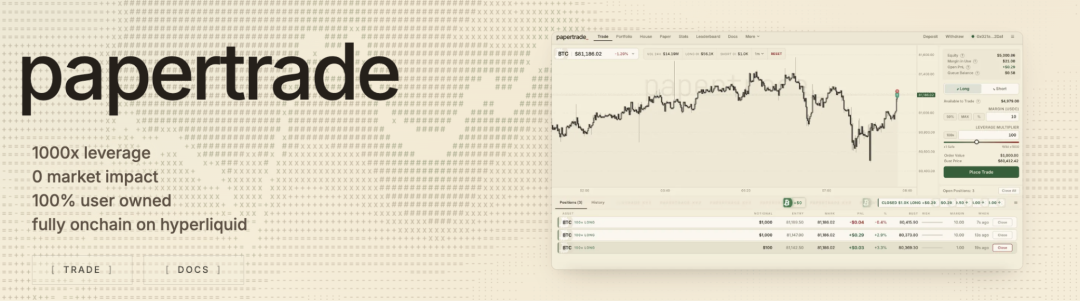
Papertrade launched on October 10, 2026, on HyperEVM with BTC and ETH markets. It reads Hyperliquid’s mid-price when positions open and close, but does not place those trades on HyperCore. Gains and losses instead settle against Papertrade’s USDC pool.
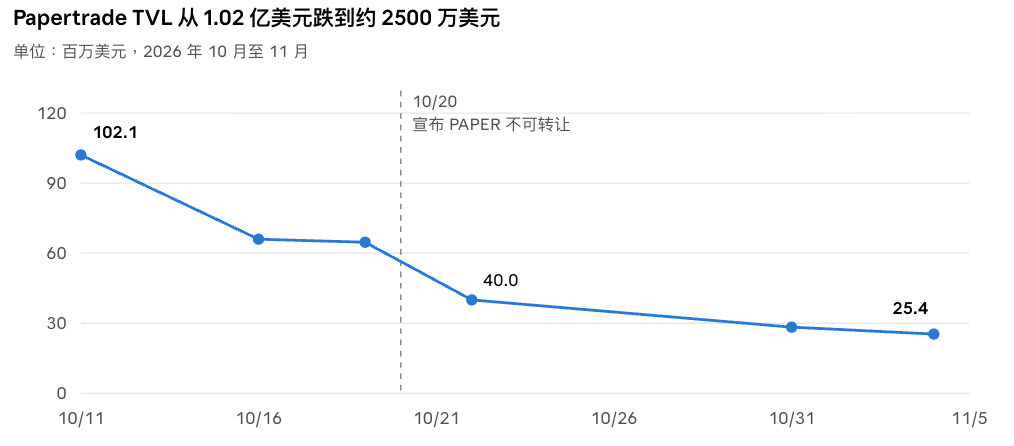
Its PAPER token was designed to be minted when a trader closed a losing position or was liquidated; staking PAPER entitled holders to a share of pool income. Papertrade subsequently announced that PAPER could be staked but not transferred or sold, citing a potential attack involving external short positions. That change frustrated users who had expected to sell the tokens they acquired.
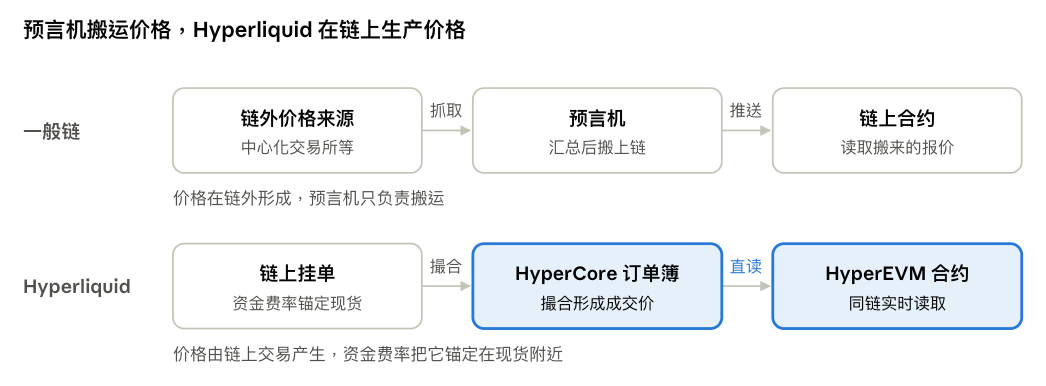
The distinction for Hyperliquid is straightforward: an application can depend on its price without sending the resulting trading volume through its order book. The original report also described an apparent attempt on Papertrade’s launch night to move Hyperliquid’s ETH price while profiting from a Papertrade position—an illustration of the risk when an external product settles against a price it does not control.
Matching access: Trade[XYZ] and proposed US markets
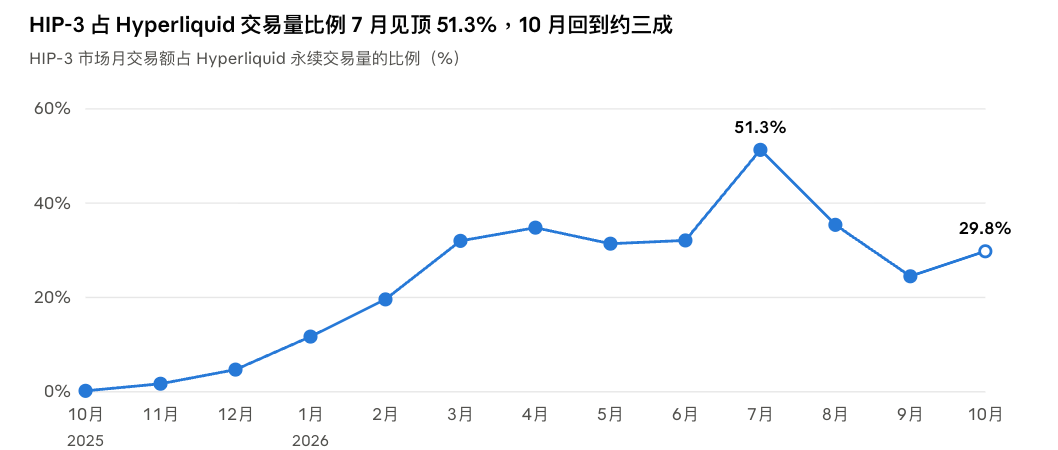
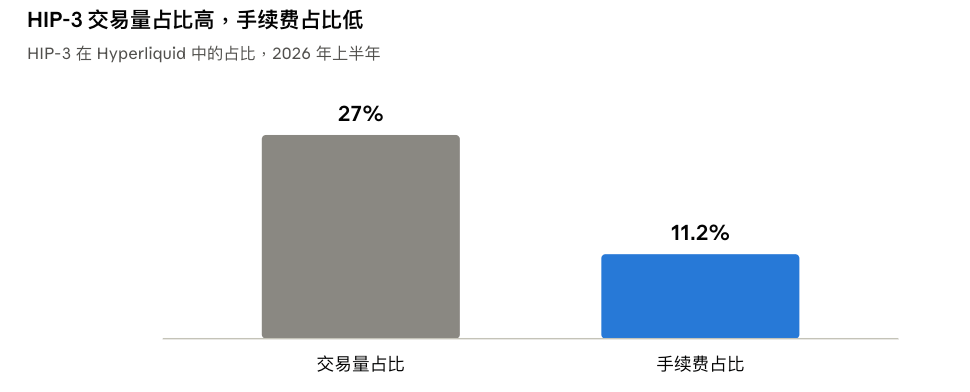
Trade[XYZ] uses HIP-3 to deploy perpetual markets directly on HyperCore. Unlike Papertrade, its trades use Hyperliquid’s matching and margin systems, although each deployed market must develop its own order-book liquidity. The source reported that Trade[XYZ] accounted for about 97% of HIP-3 volume in October 2026.
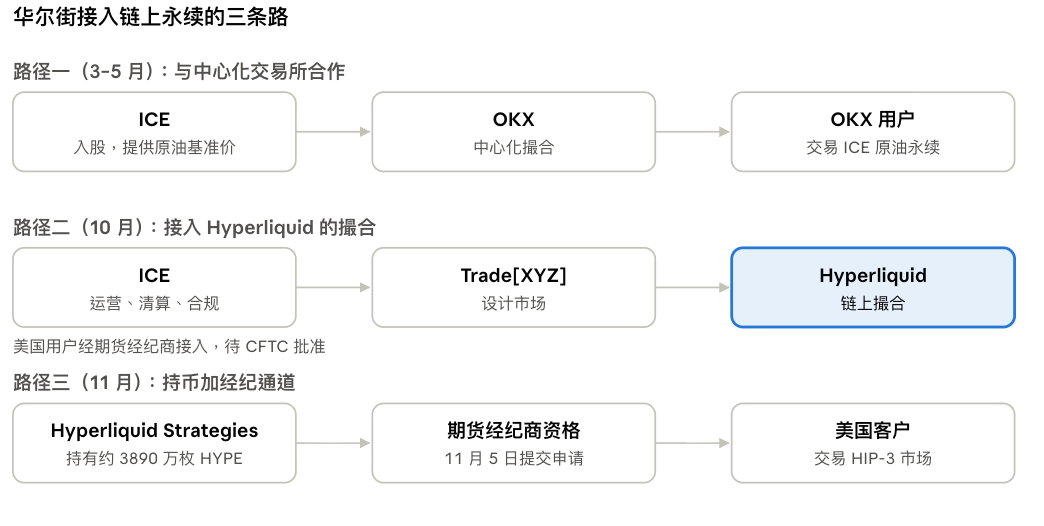
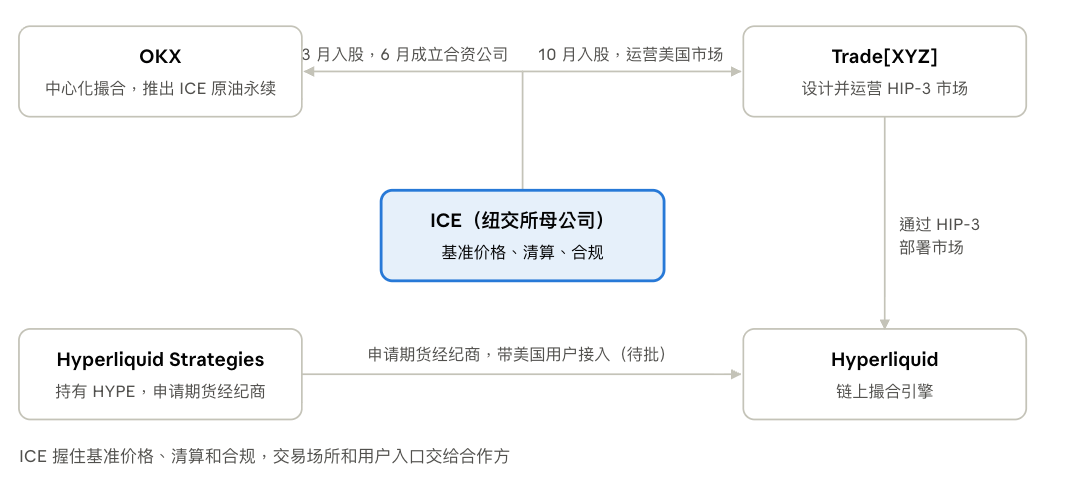
On October 29, 2026, New York Stock Exchange parent ICE took a stake in Trade[XYZ] and proposed a US market, ICE[XYZ], using Hyperliquid’s matching technology. Under the described plan, ICE would operate the exchange and handle clearing; CFTC approval was still pending. Separately, Payward, Kraken’s parent, had announced plans to deploy HIP-3 markets through Bitnomial. These were proposed regulated routes, not evidence that the planned US markets were already operating.
A regulated market could use the same matching technology while restricting which customers and market makers may participate. It therefore would not automatically inherit the liquidity of Hyperliquid’s existing offshore markets.
Order-book access: Kinetiq’s Elysium
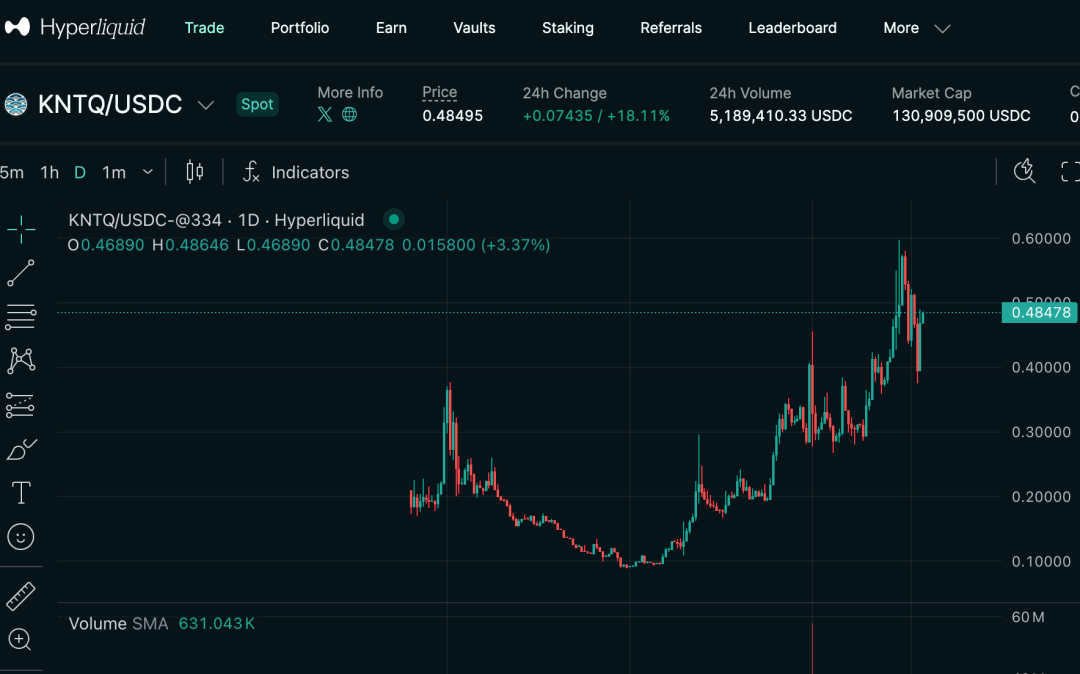
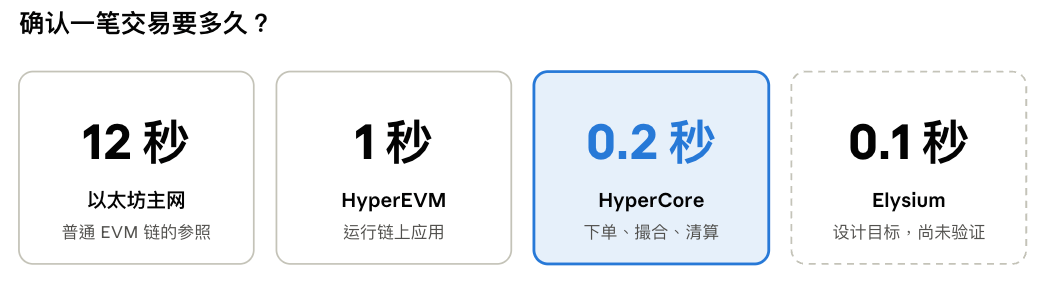
Kinetiq’s Elysium was reported to have launched its mainnet on November 9, 2026. The L2 settles to HyperEVM, uses HYPE for fees and targets roughly 100-millisecond blocks. Kinetiq’s stated throughput goal was about 100 times HyperEVM’s—not 100 times HyperCore’s trading-engine speed.
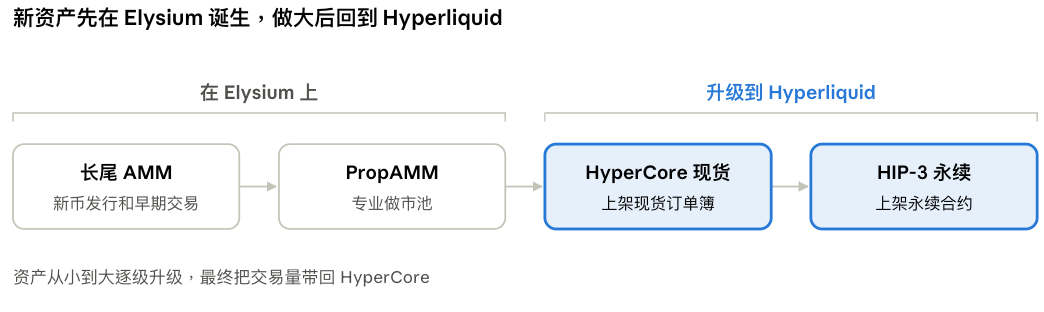
Elysium’s planned deeper access to HyperCore’s full order book, with direct order submission to follow, was distinct from its mainnet launch. The source cautioned that its performance and ability to attract liquidity had yet to be established on mainnet. It also described a different trust model: Elysium obtains full-book data through its own nodes, rather than having that data verified by Hyperliquid consensus in the way HyperEVM’s available price data is.
Kinetiq said half of Elysium’s fee revenue would go toward buying and burning KNTQ. Elysium had no token of its own at the time of the report. Its proposed route for new assets—from Elysium trading pools to HyperCore spot markets and potentially HIP-3 perpetuals—remained a plan, not a demonstrated flow of volume.
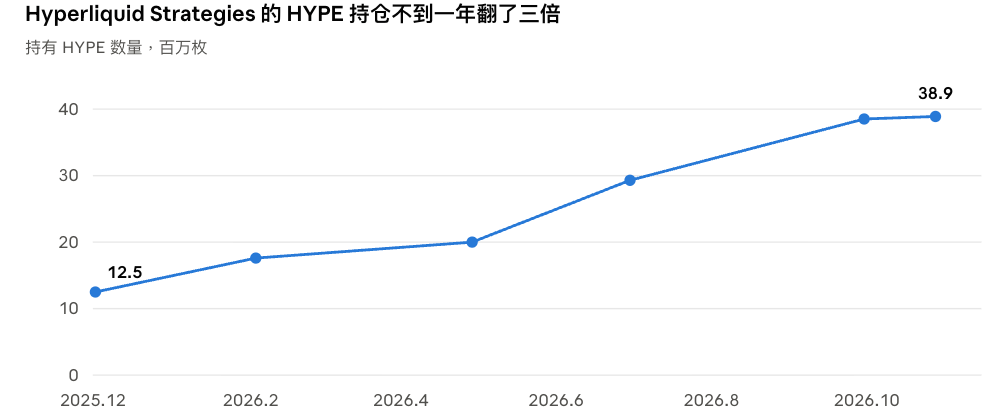
Where does HYPE benefit?
The like-for-like test is where trades occur and who receives the fees. Papertrade settles in its own pool. HIP-3 trades occur on HyperCore, but fees are shared with market deployers; the source reported a 50–50 split and discounted rates in many markets. Elysium uses HYPE for gas, while its stated buy-and-burn mechanism benefits KNTQ. Terms for the proposed ICE[XYZ] market had not been disclosed.
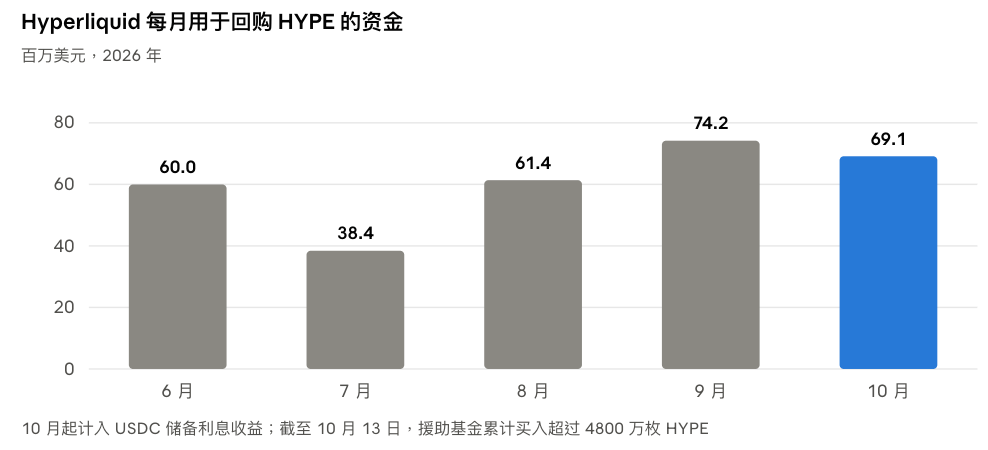
Hyperliquid uses a large share of its net trading fees to buy HYPE, but HYPE is not company equity and holders do not receive protocol revenue directly. Wider use of Hyperliquid’s prices and technology therefore does not, by itself, establish a proportional benefit for the token. The unresolved questions in the November 2026 report were whether Hyperliquid could earn revenue from external use of its order book and whether regulated markets could retain the liquidity that makes that order book useful.