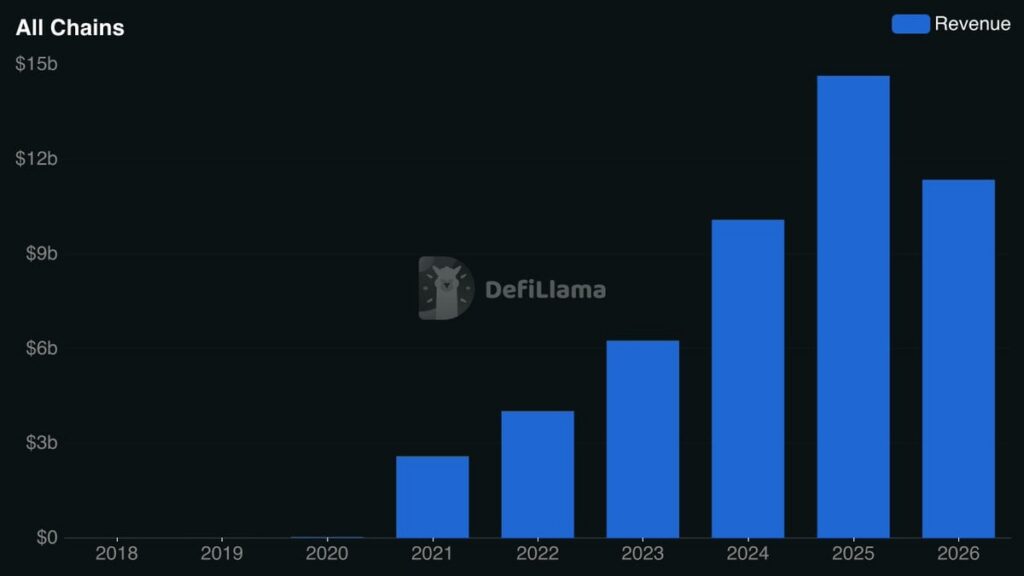
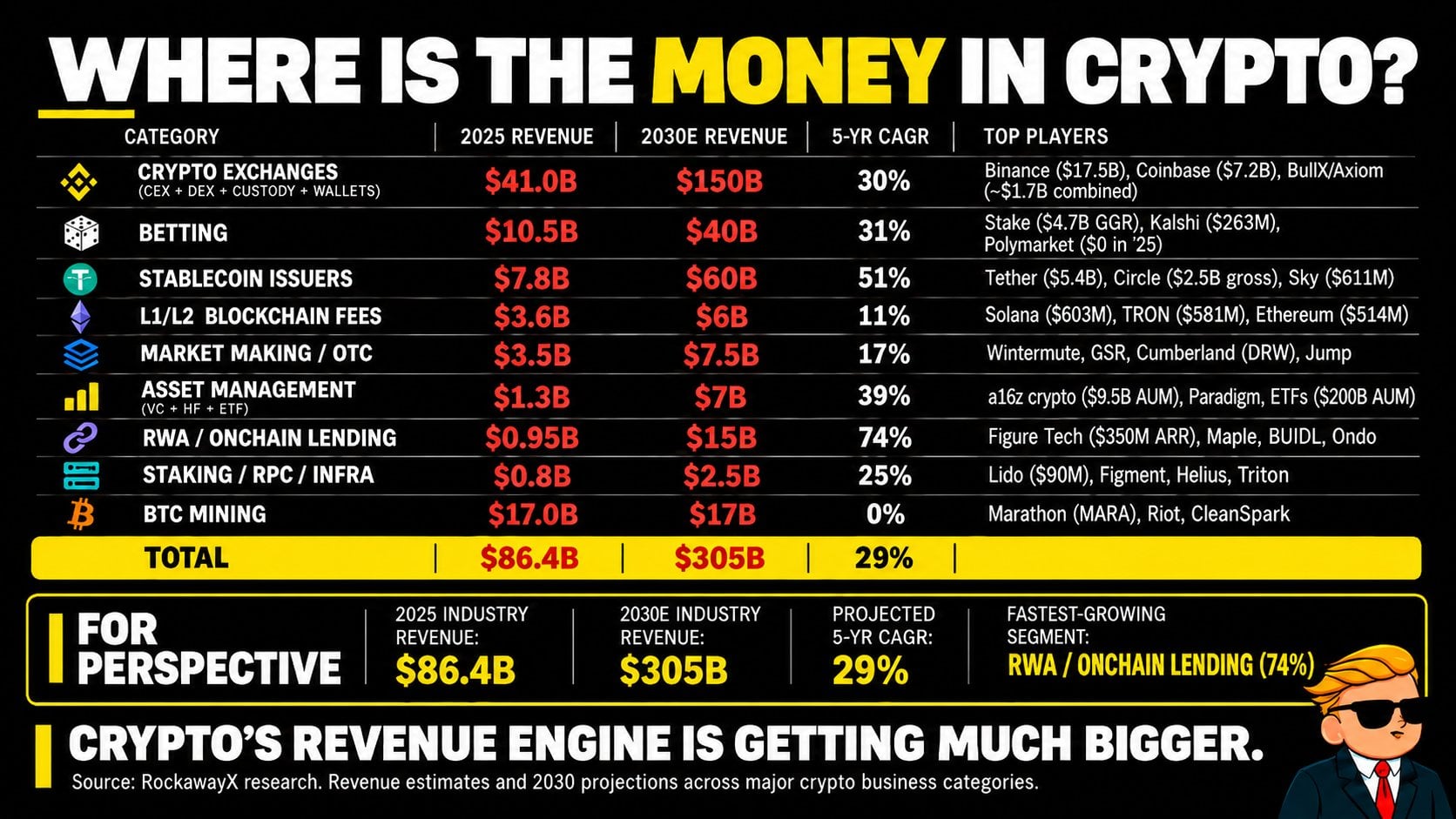
Comparison question: When a crypto protocol earns revenue, what determines whether its token benefits? A November 13, 2026 analysis by WallStreetBets, translated by Foresight News, argues that buybacks can connect business activity to token demand—but that revenue alone is not enough.
The analysis reported $11.68 billion in combined crypto-protocol revenue for 2026 through its reporting date. It projected roughly $13.9 billion for the full year if November and December matched October. That is a conditional estimate, not a reported year-end total.
Business revenue is not a token-holder claim
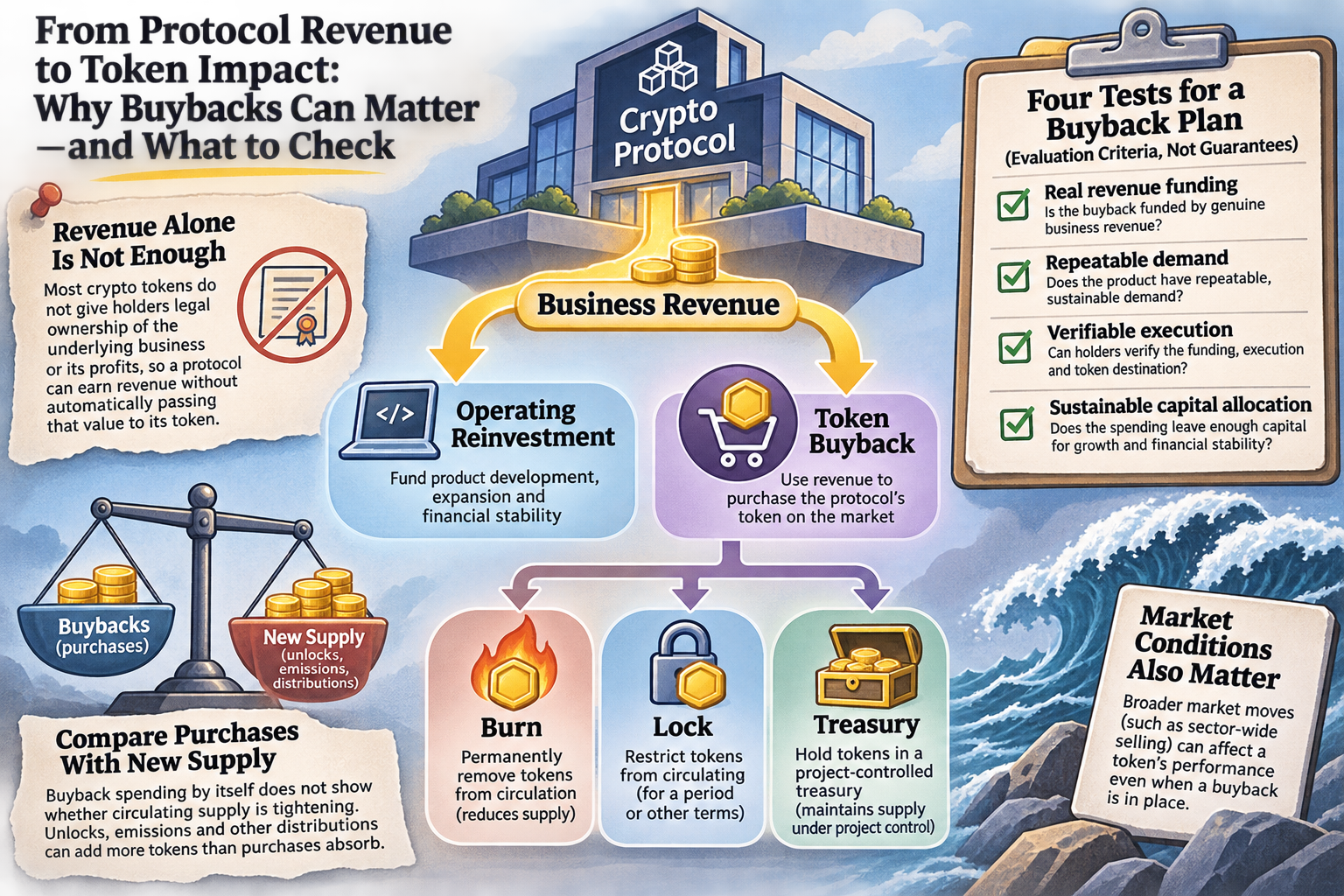
Unlike shares, most crypto tokens do not give holders legal ownership of the underlying business or its profits. A protocol can therefore earn substantial revenue without passing that value to its token. One possible connection is a buyback: a project uses funds to purchase tokens on the market, then burns them, locks them or holds them in a treasury. Those destinations have different implications for future supply.
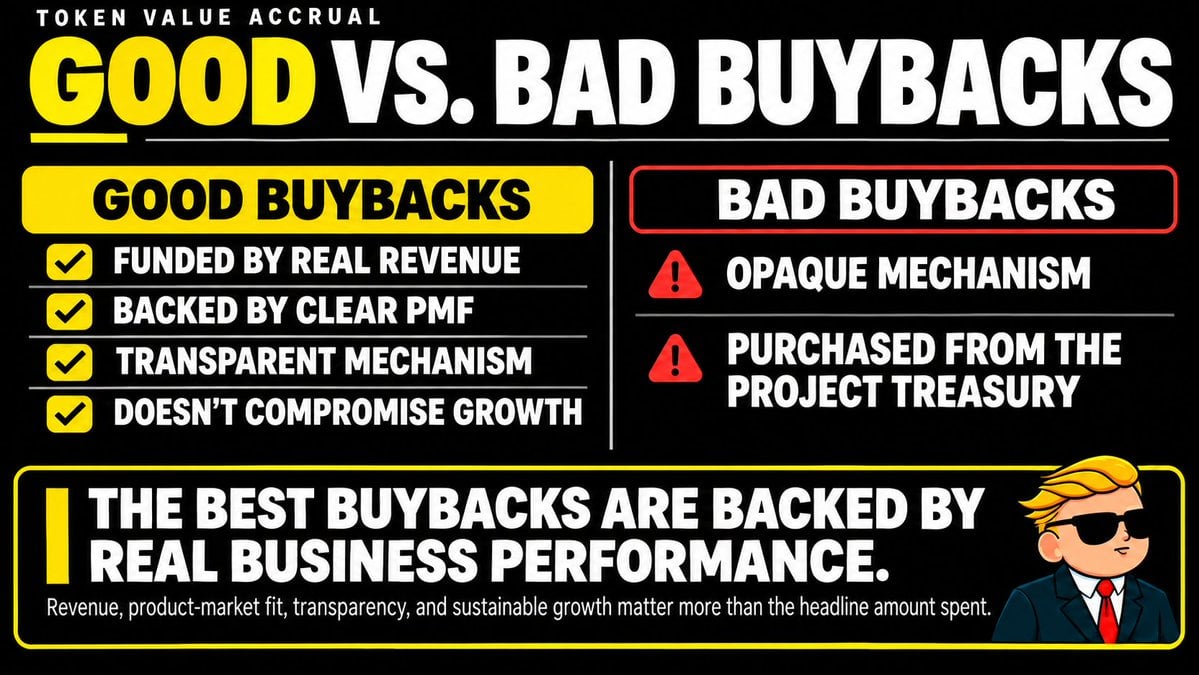
The analysis proposes four tests for a buyback: whether genuine business revenue funds it; whether demand for the product is repeatable; whether holders can verify the funding, execution and token destination; and whether the spending leaves enough capital for growth and financial stability. These are the author’s evaluation criteria, not guarantees of token performance.
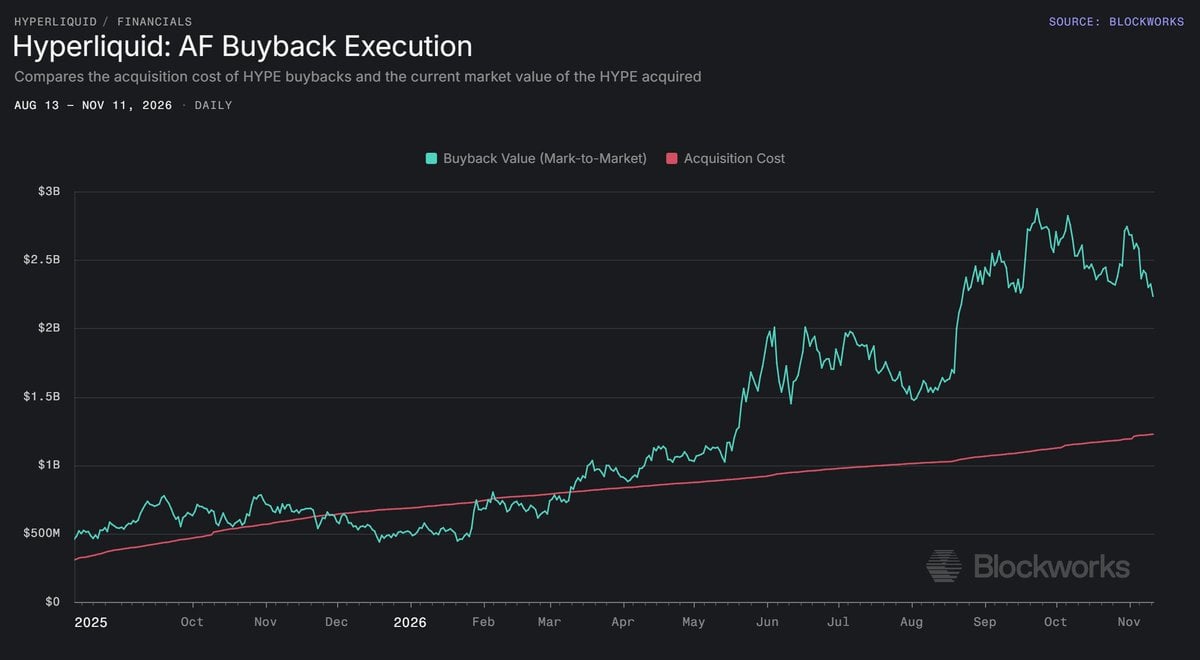
Compare purchases with new supply
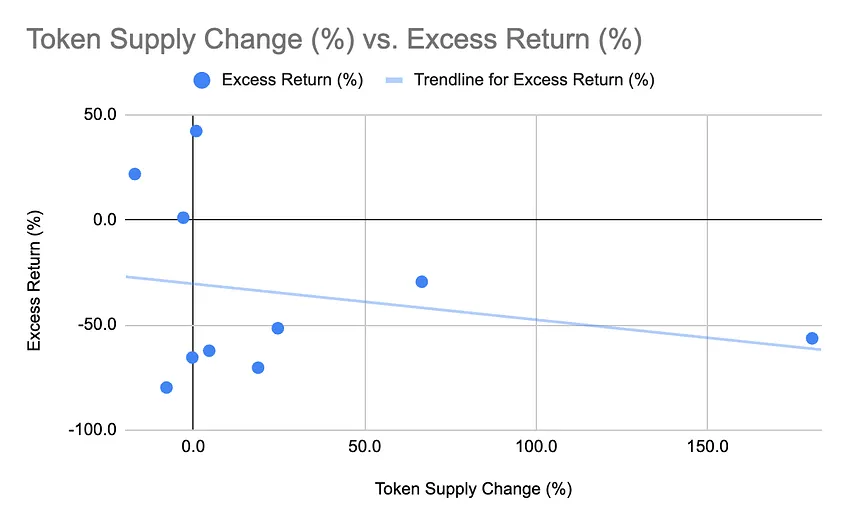
Buyback spending by itself does not show whether circulating supply is tightening. Unlocks, emissions and other distributions can add more tokens than purchases absorb. The analysis cites research by Bill Hsu finding a negative correlation between supply growth and relative market performance.
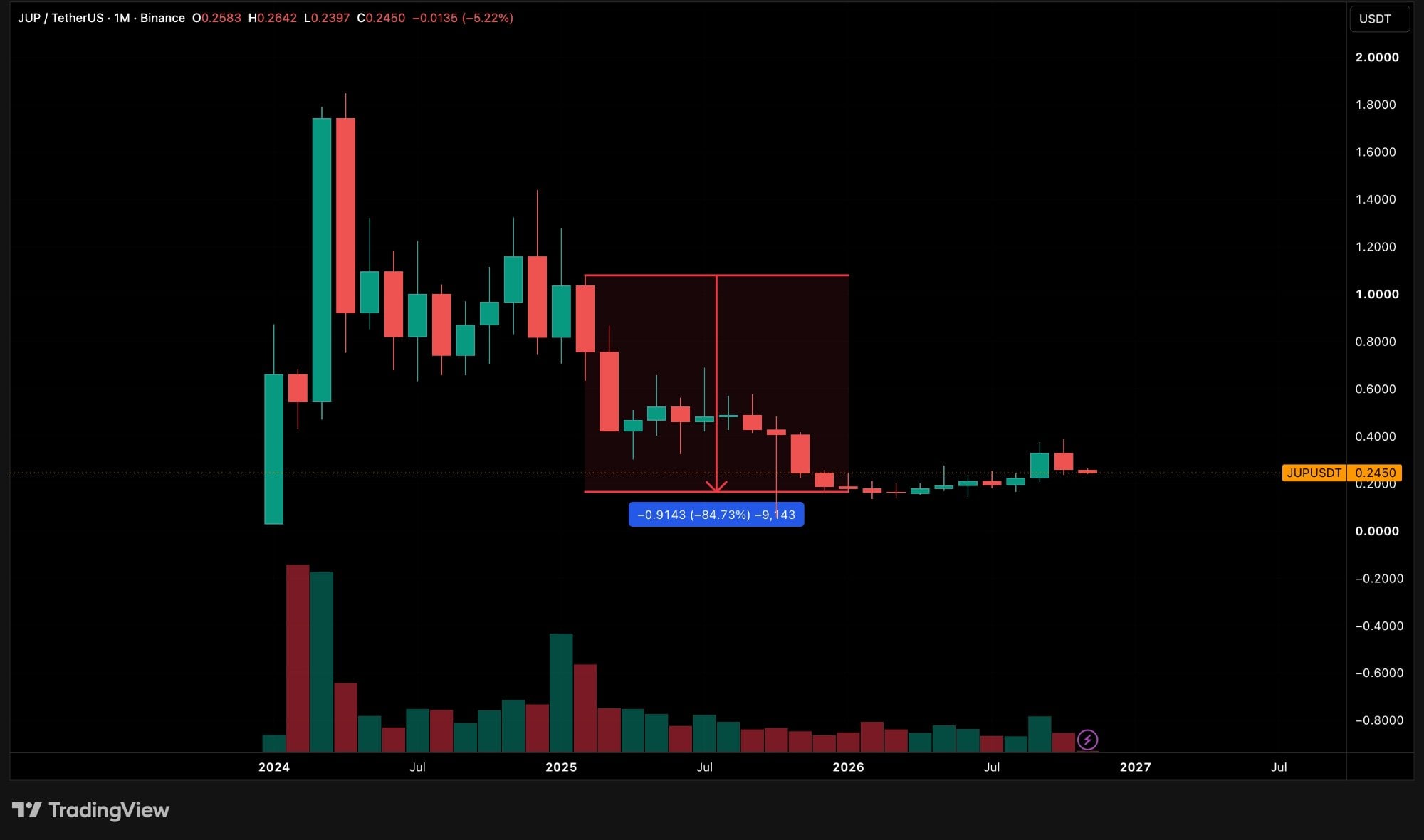
Market conditions also matter. Jupiter began allocating 50% of on-chain protocol revenue to JUP buybacks in February 2025 and had spent more than $70 million by January 2026, according to the article. JUP nevertheless fell substantially. The author points to broader selling across Solana-related assets as context, rather than treating the price decline alone as proof that the purchases had no effect.
What the reported comparisons show—and do not show
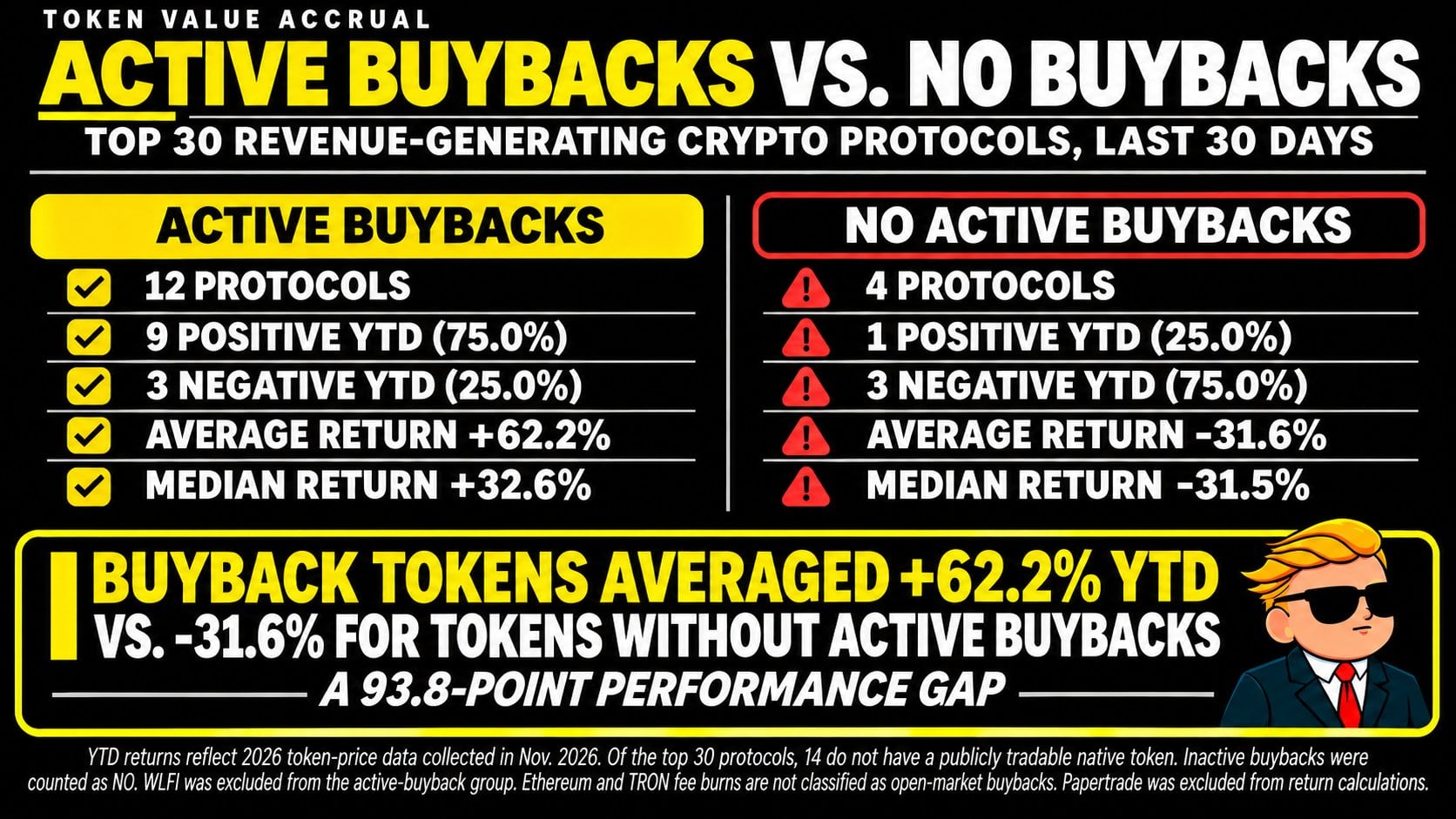
For 2025, the analysis says 28 major projects spent more than $1.4 billion on buybacks. Only AAVE, HYPE and SKY outperformed Bitcoin during their respective buyback windows. For 2026 through the reporting date, it says projects had spent more than $900 million on buybacks and related burns, predominantly at Hyperliquid and Pump.fun.
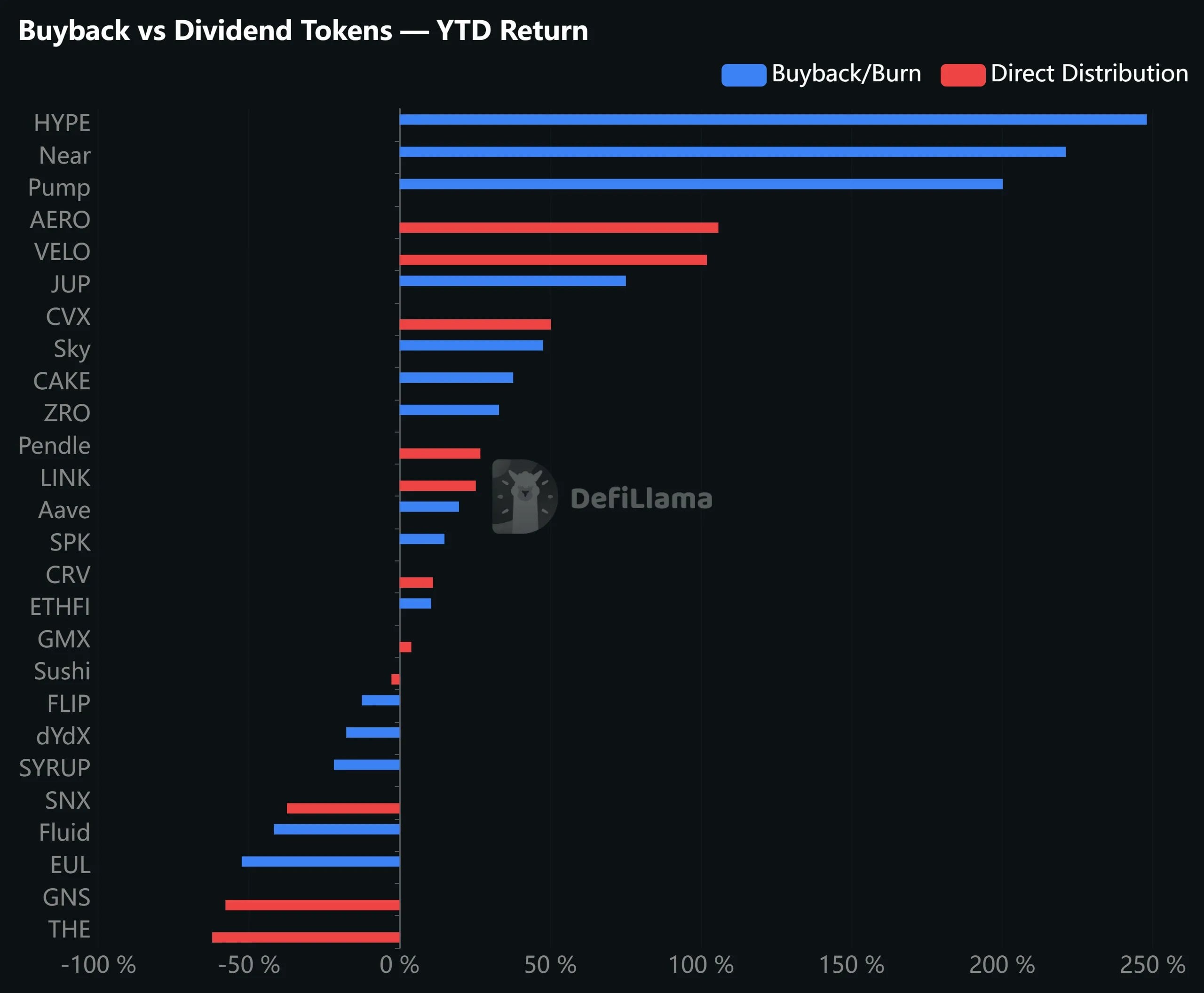
In the author’s sample of the 30 highest-revenue protocols over the preceding 30 days, 14 had no publicly traded native token. Of the remaining 16, twelve had active buybacks: nine had positive year-to-date token returns and three had negative returns, with a median return of 32.6%. Among the four without active buybacks, one was positive and three negative, with a median of −31.5%. This is a small observational comparison, not evidence that buybacks caused the difference.
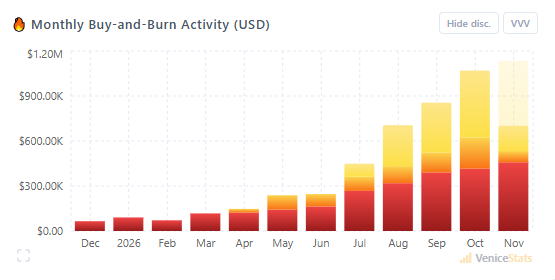
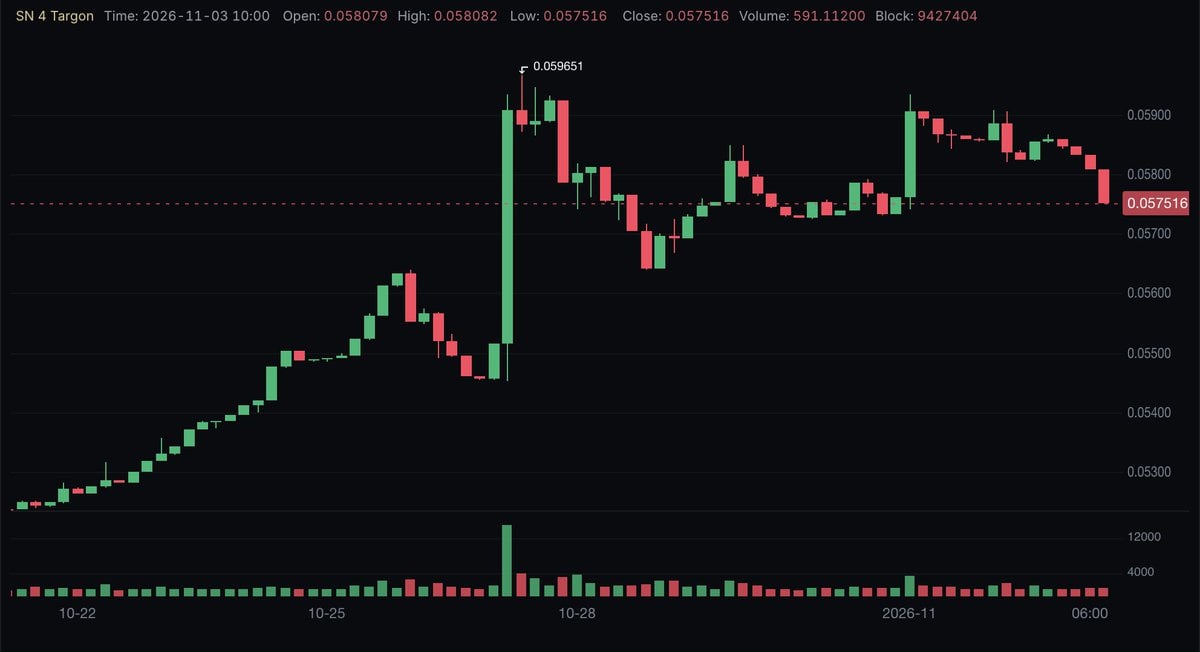
The mechanisms also differ across projects. The article says World Liberty Financial had started a WLFI buyback using a portion of USD1 reserve-related revenue; it does not specify the portion. It reports that Venice bought back approximately $458,000 of tokens on November 9, while subscription and API-credit purchases also funded automatic VVV burns. For Bittensor subnets, the question includes how revenue-funded purchases interact with emissions of subnet-specific alpha tokens. Longdotxyz’s LONG 500 mechanism instead directs 5% of fees from new tokenized-stock trading pairs to a community treasury and another 5% to buy and burn the paired community token.
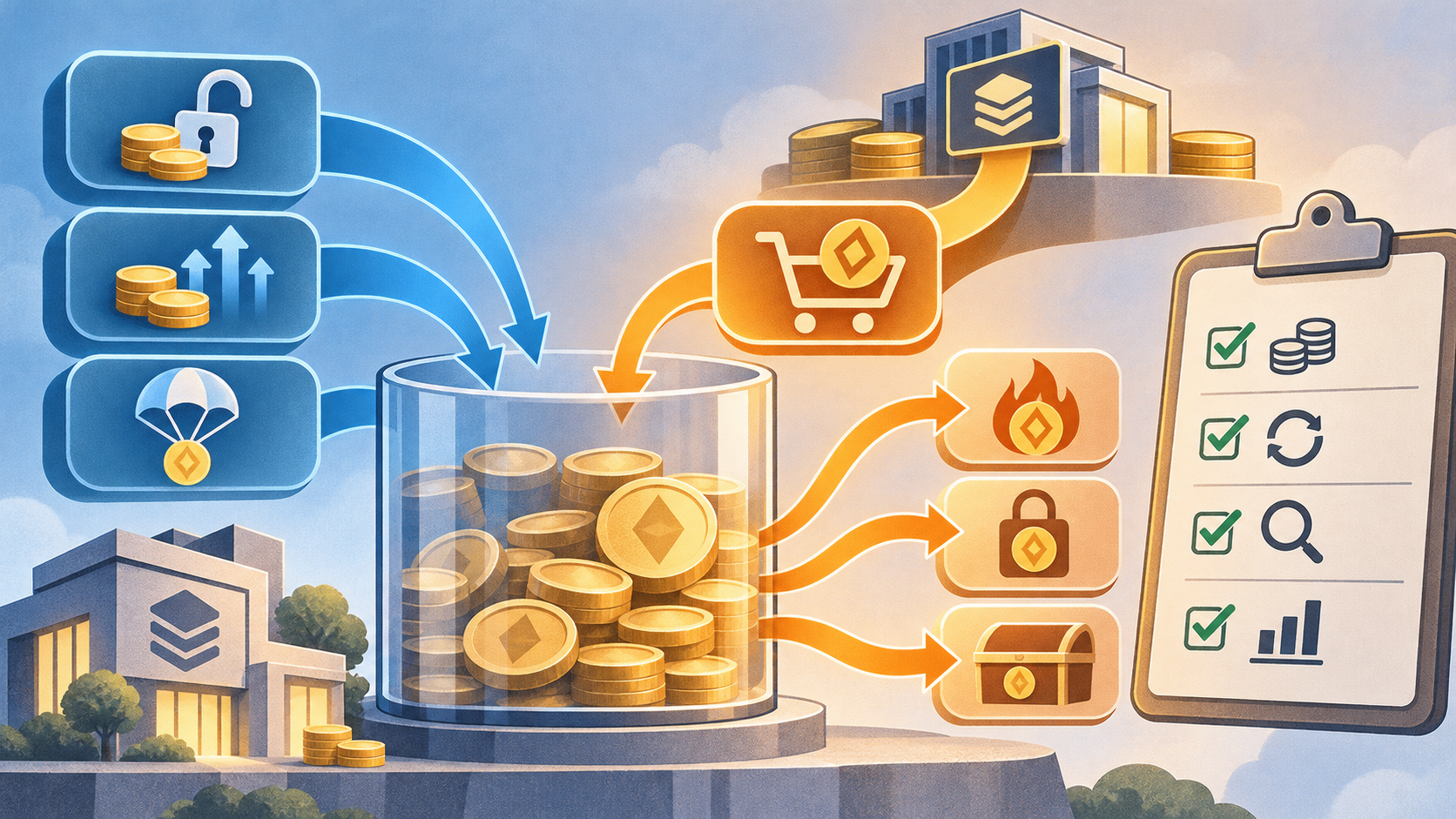
These examples are not interchangeable evidence of returns. The like-for-like questions are where the money comes from, how many tokens enter circulation, what happens to purchased tokens, and whether the mechanism is verifiable and sustainable.